
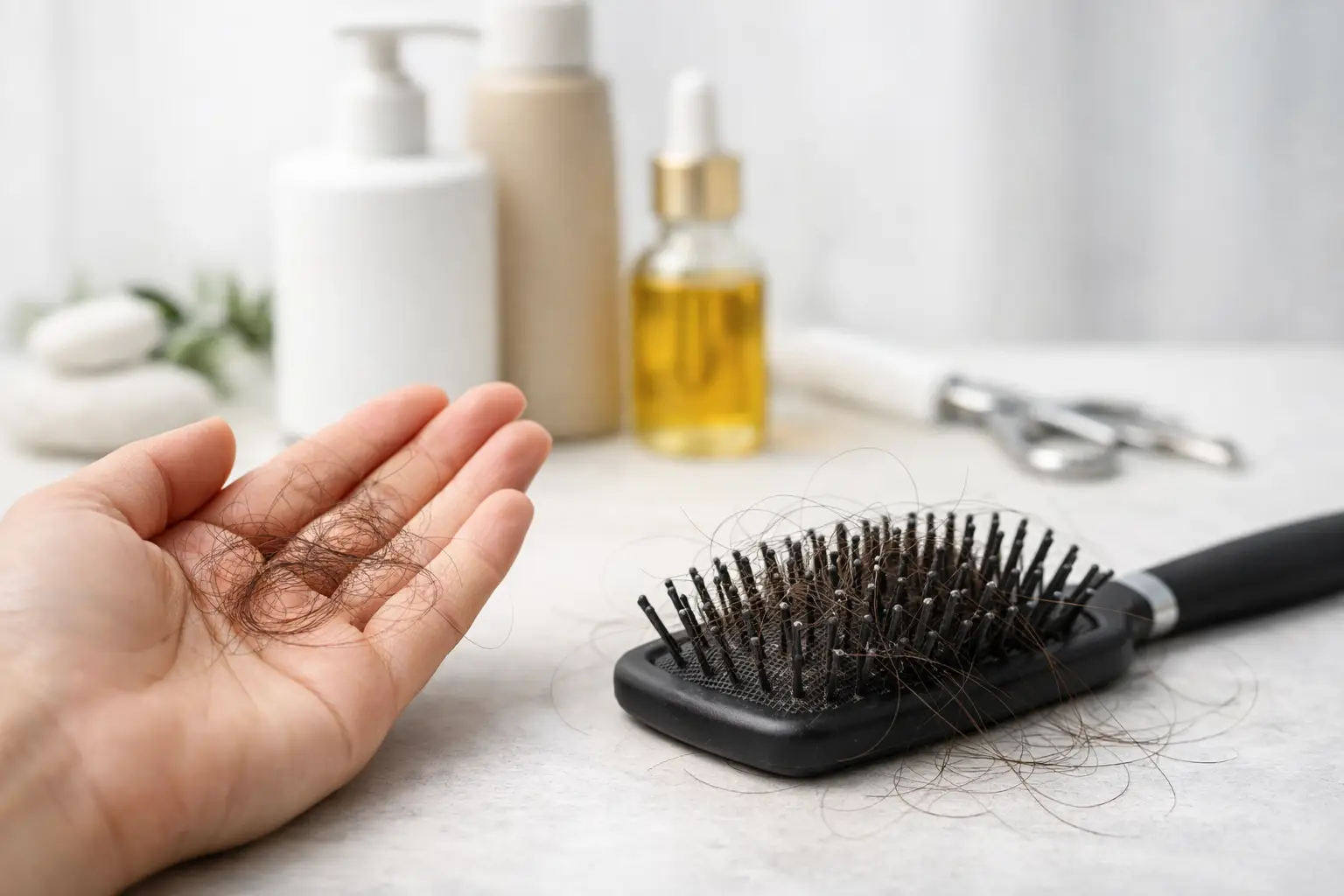
A handful of strands in the shower is normal. Seeing hair on your pillow, brush, bathroom floor, and clothes every day can feel very different. The best ways to reduce hair fallout start with understanding what your hair is reacting to, then giving your scalp, strands, and body consistent support. This is not about one miracle wash day. It is about a routine that makes stronger, fuller-looking hair easier to maintain.
First, Know Whether It Is Shedding or Breakage
Hair fallout can mean two different things. Shedding happens when a full strand releases from the root as part of the natural growth cycle. Breakage happens when a weakened strand snaps somewhere along its length. Both leave you with less volume, but they need slightly different attention.
Look at the hair you are losing. A shed strand may have a tiny white bulb at one end. Broken pieces are often shorter, uneven, and more likely to show up around your hairline, crown, or the ends of color-treated hair. If your ponytail feels thinner but your lengths are still long, shedding may be the bigger issue. If your hair will not retain length and the ends look rough, breakage may be driving the problem.
Stress, illness, hormonal shifts, rapid weight changes, medication changes, and nutritional gaps can all increase shedding. Heat damage, bleaching, tight styles, rough detangling, and dry hair can lead to breakage. Sometimes, it is both. That is why the most effective routine supports the scalp and protects the strand.
Best Ways to Reduce Hair Fallout at the Root
Give your scalp daily attention
Your scalp is where every hair begins. Product buildup, flakes, excess oil, and irritation can make your roots feel less balanced and can leave hair looking flat even before it sheds. Cleanse regularly enough for your scalp type rather than stretching washes until your roots feel uncomfortable. For some people, that means every day. For others, it may be two or three times a week.
When you shampoo, use the pads of your fingertips, not your nails, and massage gently for a minute or two. The goal is to lift buildup and encourage circulation without scratching or inflaming the skin. Rinse thoroughly, especially around the crown and nape, where residue tends to collect.
A targeted scalp treatment can make this step easier to keep up with. Organic rosemary scalp drops, for example, fit naturally into a focused routine because they are applied directly where support is needed. Consistency matters more than using too much product. Follow the directions, apply to a clean or lightly refreshed scalp as recommended, and give the routine enough time to work.
Stop treating wet hair like it is indestructible
Wet hair stretches more easily and can snap under pressure. Do not scrub it aggressively with a towel, rake through knots with a fine brush, or pull it into a tight bun while it is soaked. Instead, press out excess water with a soft towel or cotton T-shirt, then detangle from the ends upward with a wide-tooth comb or a flexible detangling brush.
If you have curly, coily, or highly textured hair, detangle with plenty of slip from a conditioner or leave-in product. If your hair is fine, use a lightweight conditioner mainly through the mid-lengths and ends so you get softness without weighing down the roots. The right technique depends on your texture, but forceful detangling is never the answer.
Protect Hair From the Damage You Can Control
You do not have to give up color, blowouts, or the occasional sleek ponytail to support healthier hair. You do need to make those habits less punishing.
Heat tools can weaken the outer layer of the strand over time, especially when used at the highest setting every day. Use a heat protectant, lower the temperature when possible, and avoid repeated passes over the same section. A blow-dryer on medium heat with a little distance from the hair is often a smarter choice than scorching strands with a flat iron.
Tight braids, extensions, buns, and ponytails can also create ongoing tension at the hairline and temples. Rotate your style, choose softer hair ties, and build in low-tension days. If a style hurts, causes headaches, or leaves tender bumps on your scalp, it is too tight.
Coloring and chemical services come with a trade-off: they can deliver the look you want, but they may increase dryness and breakage. Ask your stylist for a plan that protects your hair between appointments. That may include spacing out lightening sessions, trimming damaged ends, and using products designed to support fragile lengths.
Support Stronger Hair From Within
Hair is not just a styling issue. It is a living tissue that relies on the nutrients you consistently provide. Under-eating, skipping protein, or following a highly restrictive diet can show up in your hair months later. Aim for regular meals with protein-rich foods, colorful produce, healthy fats, and enough overall calories to support your body.
Biotin is often part of hair wellness conversations because it supports normal nutrient metabolism. A daily biotin gummy can be a convenient addition for people who want a simple, repeatable routine, but supplements are not a substitute for food or medical care. More is not always better, and biotin can interfere with certain lab tests. Tell your health care provider about every supplement you take before blood work.
Sleep and stress management also deserve a place in your hair routine. A stressful season may not be fully avoidable, but small habits can reduce the strain: protecting your sleep schedule, taking walks, moving your body, and choosing a routine you can actually sustain. Hair responds slowly, so steady care beats short bursts of perfection.
Build a Routine You Will Actually Follow
Complicated routines often fail because they demand too much time. A practical system has clear roles: nourish the scalp, protect the lengths, and support your body consistently. That is the logic behind a coordinated approach like ROXIHAIR’s three-step hair growth system, combining scalp drops, a thickening spray, and biotin gummies in one at-home routine.
A thickening spray is especially useful when you want an immediate confidence boost while working on long-term habits. It can help hair appear fuller, add lift at the roots, and reduce the urge to over-style limp or fragile sections. Apply it as directed, focus on the areas where you want volume, and avoid piling on heavy products that leave buildup behind.
Set your products where you will use them. Keep scalp drops by your mirror, gummies near your morning essentials, and styling support with your blow-dryer. These small cues turn hair care into a habit instead of another task to remember.
Be Patient, but Do Not Ignore Sudden Changes
Hair growth moves on its own timeline. You may notice less breakage, improved softness, or fuller-looking roots before you see obvious changes in length or density. Take a photo in the same lighting once a month rather than judging your hair every morning. Progress is easier to see when you have a real comparison.
Some hair fallout needs professional attention, especially when it is sudden, patchy, painful, or accompanied by other symptoms. Talk with a dermatologist or health care provider if you notice:
- Bald patches or a rapidly widening part
- Scalp pain, burning, sores, or heavy scaling
- Sudden shedding after a new medication or major health event
- Hair loss with fatigue, unexpected weight changes, or other new symptoms
Getting answers is not overreacting. It is a smart way to rule out conditions that at-home hair care cannot address on its own.
Your hair does not need a harsh reset. It needs a calm, consistent plan: treat the scalp with care, handle fragile strands gently, fuel your body well, and give the routine time to show what it can do. Start with the step you can repeat today, then let that daily care build toward the stronger, thicker-looking hair you want to see in the mirror.