
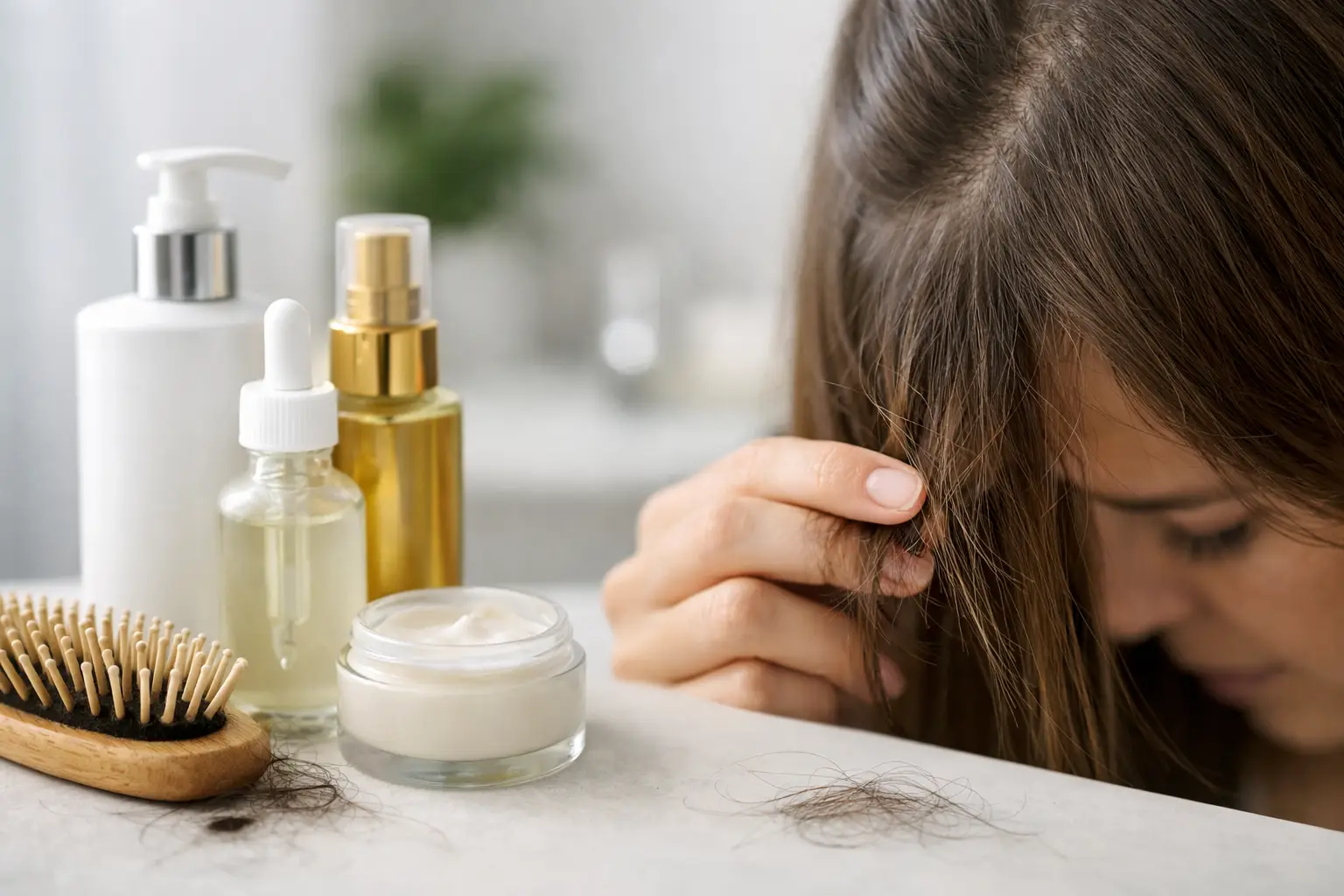
You notice it in the brush first. Then in the shower drain. Then one day your ponytail feels smaller, your ends look weaker, and the products that used to work suddenly do not. If you are searching for hair products for breakage and thinning, the real goal is not just making hair look better for a day. It is choosing products that help your scalp, support fragile strands, and fit into a routine you will actually keep using.
Breakage and thinning often show up together, but they are not the same problem. Breakage happens when the hair shaft becomes weak and snaps from heat, color, tight styles, rough brushing, or dryness. Thinning is more about reduced density over time, often tied to shedding, stress, hormones, age, scalp imbalance, or poor follicle support. That distinction matters because the best routine usually needs to do two jobs at once – protect the hair you have and support healthier growth going forward.
What to look for in hair products for breakage and thinning
The best products do not rely on one dramatic claim. They work as a system. One product can help the scalp, another can reduce daily stress on the strands, and another can support hair from within. If you are only using a styling product and hoping it solves everything, that is usually where progress stalls.
Start with scalp support. A stressed scalp can make it harder for hair to grow in strong and consistent. Products with botanical oils and plant-based actives can help create a healthier environment without the heavy feel or harsh ingredients that some people want to avoid. Rosemary is especially popular for a reason. It is often used in scalp-focused routines because it supports circulation and helps energize the root area while fitting into a natural hair wellness routine.
Next, think about strand protection. If your hair is snapping off, thickness alone is not enough. You need products that help reduce mechanical damage from brushing, blow-drying, and styling. Thickening sprays and lightweight leave-ins can help hair look fuller while also giving it a bit of support so it bends instead of breaking.
Then there is internal support. Hair is not only a styling issue. It is also affected by what your body has available to build strong strands. That is why many people do better with a routine that includes nutritional support such as biotin-based formulas. They are not magic overnight fixes, but they can make sense as part of a consistent plan.
Why single-product fixes usually disappoint
A lot of people buy one bottle after a bad hair week and expect a complete turnaround. That is understandable, but hair does not work that way. If your scalp is dry or stressed, your ends are damaged from bleach, and your routine is inconsistent, one product may help one layer of the problem but not all of it.
That is why coordinated routines tend to outperform random product mixing. A scalp treatment can target the root area. A thickening or protective spray can help reduce the look and feel of weakness through the lengths. A daily supplement can support the internal side. When those steps work together, the routine is easier to follow and the results usually feel more realistic.
This is also where trade-offs matter. Some heavy oils can make dry hair feel softer but leave fine or thinning hair flat. Some volumizing products create body but can make damaged hair feel stiff if overused. Some strong shampoos make the scalp feel extra clean but strip moisture from already fragile lengths. The right routine depends on whether your hair is fine, color-treated, curly, heat-damaged, oily at the root, or dry all over.
Ingredients that make sense when hair feels weak
When shopping for products, it helps to focus less on trendy packaging and more on what the formula is trying to do.
Rosemary is one of the standout ingredients for people dealing with thinning and scalp stress. It is often used in scalp drops and oils because it supports a healthier scalp environment and works well in natural-focused routines.
Biotin is another common favorite. It is widely used in hair wellness supplements because it supports keratin production, which matters for hair strength. It is not the only nutrient that counts, but it is one of the most recognized for a reason.
Proteins can help reinforce damaged strands, though the balance matters. If your hair is severely overprocessed, a protein-supporting product may help it feel stronger. If your hair is already dry and stiff, too much protein can make it feel rough. Moisture and strength need to stay in balance.
Lightweight botanical oils can also help, especially for reducing friction and adding softness without making the scalp feel coated. The key word is lightweight. If your hair is thinning, you usually want nourishment without buildup.
A smarter routine for breakage and thinning
If your current shelf is full of half-used bottles, this is where simplifying helps. You do not need a 12-step process. You need a routine you can repeat.
Start with a scalp-focused treatment a few times a week or as directed. This step is for the root, not the ends. It is especially useful if your thinning feels connected to stress, shedding, or a dry, imbalanced scalp.
Follow with a daily styling or finishing product that gives hair a fuller look while helping protect it from day-to-day stress. A good thickening spray can make hair appear denser right away, but the best ones also help reduce the damage that comes from heat styling and brushing.
Add internal support if your hair has been slow to recover. Gummies or supplements are easy for most people to stay consistent with, which matters more than choosing the most complicated formula on the market.
This three-part approach is one reason complete systems are appealing. Instead of guessing which product does what, each item has a clear role. That is part of why brands like ROXIHAIR position hair care around scalp nourishment, strand thickening, and nutritional support together. It makes the routine easier to stick with, and consistency is where results start to show.
How to tell if a product is helping or just coating the problem
Some products make hair feel amazing for one wash and then leave it dull, limp, or brittle a few days later. That is usually a sign the formula is giving cosmetic payoff without enough real support.
Helpful products tend to improve how hair behaves over time. You may notice less snapping when brushing, fewer short broken pieces around the crown, better softness without greasiness, and a scalp that feels calmer instead of irritated. For thinning concerns, you may first see better manageability and fullness before you notice bigger changes in density.
Patience matters here. Breakage can improve relatively quickly when you stop the damage cycle. Thinning usually takes longer because you are waiting on the growth process. If a product promises instant regrowth, that should raise questions. Fuller-looking hair today and healthier support over weeks is a more honest expectation.
Common mistakes that keep hair stuck
One of the biggest mistakes is using products too aggressively. More is not always better. Oversaturating the scalp, over-washing, layering too many stylers, or switching routines every two weeks can leave hair confused and stressed.
Another mistake is ignoring mechanical damage. Even excellent hair products for breakage and thinning will struggle if you are still using scorching heat every morning, ripping through knots, sleeping on rough fabric, or wearing tight styles daily. Products can support recovery, but they cannot fully cancel ongoing damage.
The third mistake is expecting a cosmetic product to fix a wellness issue alone. If your hair thinning is tied to stress, nutrition, hormones, or a major lifestyle shift, topical care helps, but a more complete routine usually works better than surface-level styling fixes.
Choosing products by hair type
Fine hair usually does best with lightweight scalp treatments, airy thickening products, and formulas that do not leave residue. Heavy butters and rich oils can make the hair look flatter, even if they feel nourishing at first.
Color-treated or bleached hair often needs a little more softness and reinforcement through the mid-lengths and ends. In that case, a scalp product plus a strengthening leave-in or thickening spray can be a better match than a scalp-only routine.
Curly or textured hair needs special attention to breakage because bends in the strand can be more fragile. Here, moisture retention matters just as much as scalp care. You want support that helps the hair stay flexible, not dry and rigid.
If your scalp gets oily quickly but your ends are dry, do not assume you need harsh cleansing. You may need targeted scalp care and lighter daily products instead of stripping everything down.
The best routine is the one that respects your hair type, your damage history, and your patience level. A product can be good and still be wrong for you.
Hair recovery rarely comes from one miracle bottle. It comes from using the right products with enough consistency to give your scalp and strands a real chance to respond. When your routine supports growth at the root, protects the hair you have, and keeps the process simple, stronger, fuller-looking hair stops feeling out of reach.