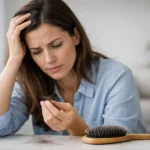

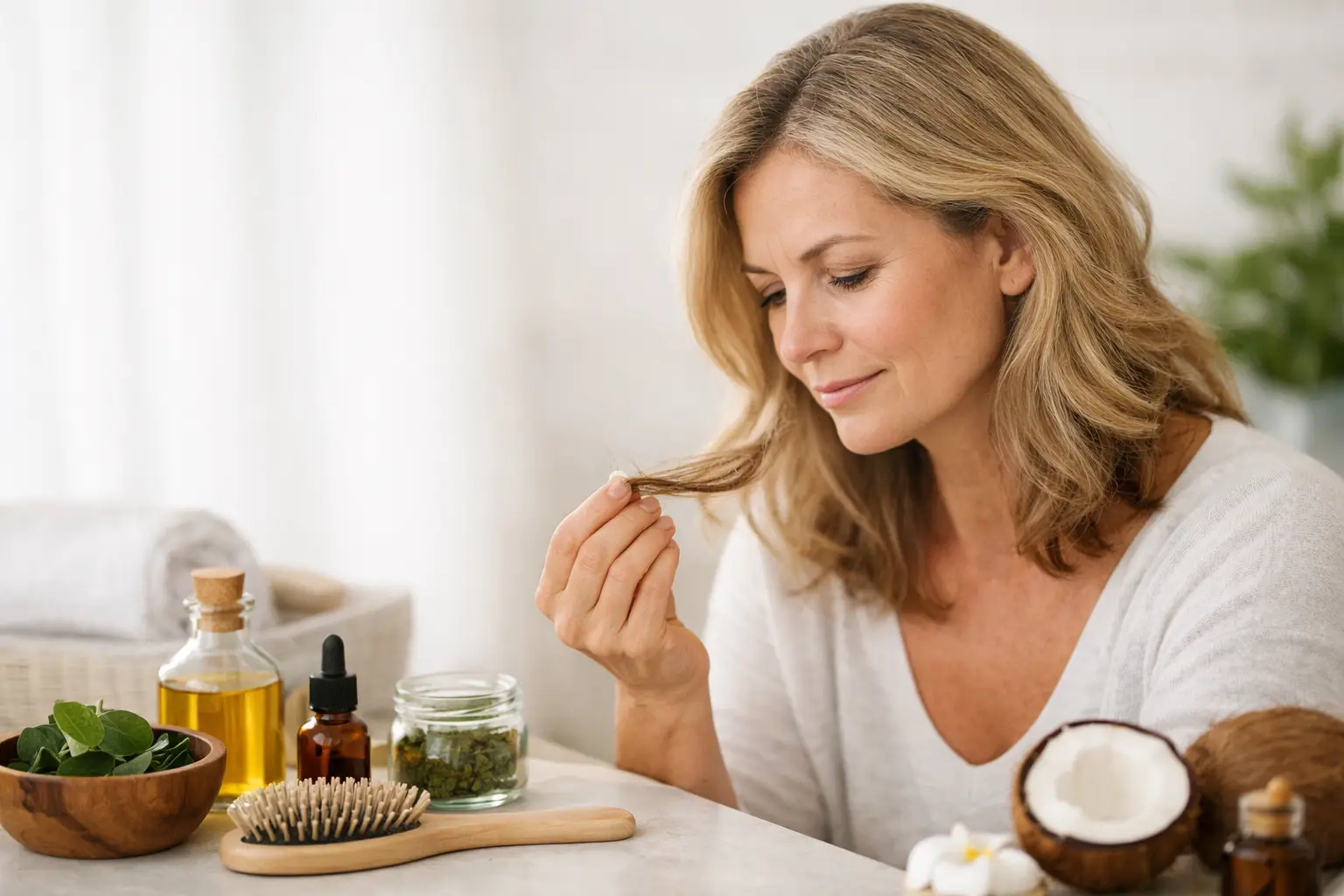
You notice it in the shower first. Then in your brush. Then one day your ponytail feels smaller, your part looks wider, and the hair products that used to work suddenly fall flat. Natural solutions for menopausal hair thinning matter because this kind of hair loss can feel personal, fast, and frustrating – but it is not random, and it is not something you have to ignore.
Menopausal hair thinning often shows up as diffuse shedding, less density around the crown, more scalp visibility, and a drier, more fragile texture. Hormonal shifts play a major role, especially the drop in estrogen and progesterone that can make hair growth cycles shorter and strands finer. At the same time, stress, sleep disruption, nutritional gaps, and years of coloring or heat styling can push a manageable issue into a bigger one. That is why the most effective natural approach is rarely one single fix. It is a consistent routine that supports the scalp, the strand, and the body at the same time.
Why menopausal hair thinning happens
Hair is deeply connected to what is happening inside your body. During menopause, changing hormones can leave hair more sensitive to androgens, which may gradually shrink follicles and reduce the thickness of each strand. Some women notice more shedding. Others notice that hair is still growing, but it is growing back weaker.
There is also the scalp factor. A dry, irritated, or congested scalp creates a poor environment for healthy-looking hair. Add stress hormones, poor sleep, low protein intake, or low iron, and thinning can feel like it accelerates overnight. It usually does not. It builds slowly, then becomes hard to ignore.
That is actually good news. When a problem builds from several causes, improvement can come from several angles too.
Natural solutions for menopausal hair thinning that make sense
If you are looking for natural solutions for menopausal hair thinning, start with what gives your hair the best chance to stay anchored, grow stronger, and look fuller now. Natural does not mean passive. It means choosing supportive habits and ingredients that work with your body instead of overwhelming it.
Start with the scalp
A healthy scalp is the foundation. If your follicles are dealing with buildup, irritation, or poor circulation, hair can struggle even if the rest of your routine looks good.
Scalp massage is one of the simplest places to begin. A few minutes a day can help support circulation and relieve tension, especially if stress has your whole body feeling tight. Consistency matters more than intensity. You do not need to scrub aggressively. Gentle pressure with your fingertips is enough.
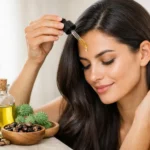
Plant-based scalp oils and botanical drops can also help, especially formulas built around rosemary. Rosemary has become popular for a reason – it is widely used in hair wellness routines because it helps create a healthier scalp environment and supports the appearance of stronger, fuller hair over time. The trade-off is patience. Natural scalp support is not a one-wash miracle. It works best when used regularly for weeks, not days.
If your scalp is flaky or sensitive, be selective. More oil is not always better. Some people thrive with richer treatments, while others do better with lighter, mess-free formulas that absorb quickly and fit into a daily routine.
Support hair from the inside
Menopausal thinning is not only a surface issue. Your body needs the raw materials to build hair, and many women are not getting enough of them consistently.
Protein matters because hair is made largely of keratin, a protein. If your meals are light on protein, your body may prioritize other systems before hair. Iron, vitamin D, zinc, and certain B vitamins also matter. Biotin gets the spotlight, and it can be a helpful part of a broader routine, but it is not magic on its own. Hair usually responds best when internal support is well-rounded rather than built around one trendy ingredient.
This is why gummies and supplements appeal to so many women during menopause. They simplify the habit. If you are going that route, look for a routine you can realistically stick with every day. The best supplement is the one you actually take long enough to matter.
Hydration counts too. Menopausal hair often feels drier and rougher, and dehydration can make that worse. Water will not regrow hair by itself, but it does support overall wellness, which shows up in your skin, scalp, and hair quality.
Daily habits that protect thinning hair
When hair is already vulnerable, everyday habits can either help preserve it or quietly chip away at it.
Heat styling is one of the biggest stressors. You do not have to give up your blowout forever, but frequent high heat can make thinning hair look even thinner by increasing breakage and dullness. Lower temperatures, fewer passes, and heat protection can make a real difference.
Tight styles can also be a problem. Slick buns and tight ponytails may look polished, but repeated tension puts stress on follicles and can worsen loss around the hairline and temples. If your hair is thinning, softer styles are the better bet.
Then there is over-processing. Color, bleach, and chemical treatments can leave menopausal hair brittle fast. That does not mean you need to stop coloring if it is part of how you feel like yourself. It means your hair may now need more recovery time, more conditioning support, and less overlap of harsh services.
A thickening spray can help here because it gives instant cosmetic support while helping fragile hair look fuller and feel easier to style. That immediate lift matters. Sometimes the first win is not new growth. It is being able to look in the mirror and feel like your hair has body again.
Stress, sleep, and the hair connection
Hormones are not the only story. Menopause often comes with poor sleep, mood swings, and higher stress, and all three can show up in your hair.
When your body is under ongoing stress, more hairs can shift into the shedding phase. You may not connect the dots right away because the shedding often shows up weeks or months after the stress spike. That is why a natural hair routine works better when it includes nervous system support too.
That could look like evening walks, better sleep hygiene, breathwork, lighter workouts during high-stress periods, or simply reducing the pressure to fix everything overnight. Your body responds to what you repeat. Hair does too.
When progress feels slow
This is the part most people need to hear. Hair recovery is slow, even when you are doing things right. Natural routines usually need at least a few months of consistency before you can judge them fairly. You may notice less shedding first, then better texture, then small signs of fullness. Growth rarely happens in a straight line.
It also depends on the cause. If thinning is tied mostly to menopause-related hormonal shifts and stress, a natural routine may help significantly. If there is also thyroid dysfunction, severe anemia, medication-related shedding, or a scalp condition, you may need medical support alongside natural care. That is not failure. That is smart.
Building a routine you will actually keep
The best routine is not the most complicated one. It is the one that fits your real life. For most women, that means a simple system: a scalp treatment used consistently, internal nutritional support, and a daily styling product that protects and boosts the look of fullness.
That combination works because it covers the full picture. Scalp care supports the root environment. Internal support helps nourish growth from within. Daily strand support helps you hold onto a fuller look while your routine builds momentum. It is a practical, natural way to address thinning without turning your bathroom into a lab.
If you have tried random products before and felt disappointed, that makes sense. Hair thinning usually does not respond well to disconnected fixes. It responds better to a coordinated approach. That is one reason systems like ROXIHAIR resonate with women who want something clear, natural, and easy to stay consistent with at home.
Menopausal hair thinning can shake your confidence, but it does not get the final word. With the right natural support, steady habits, and a little patience, you can give your scalp and strands a much better environment to recover, strengthen, and start looking fuller again.