
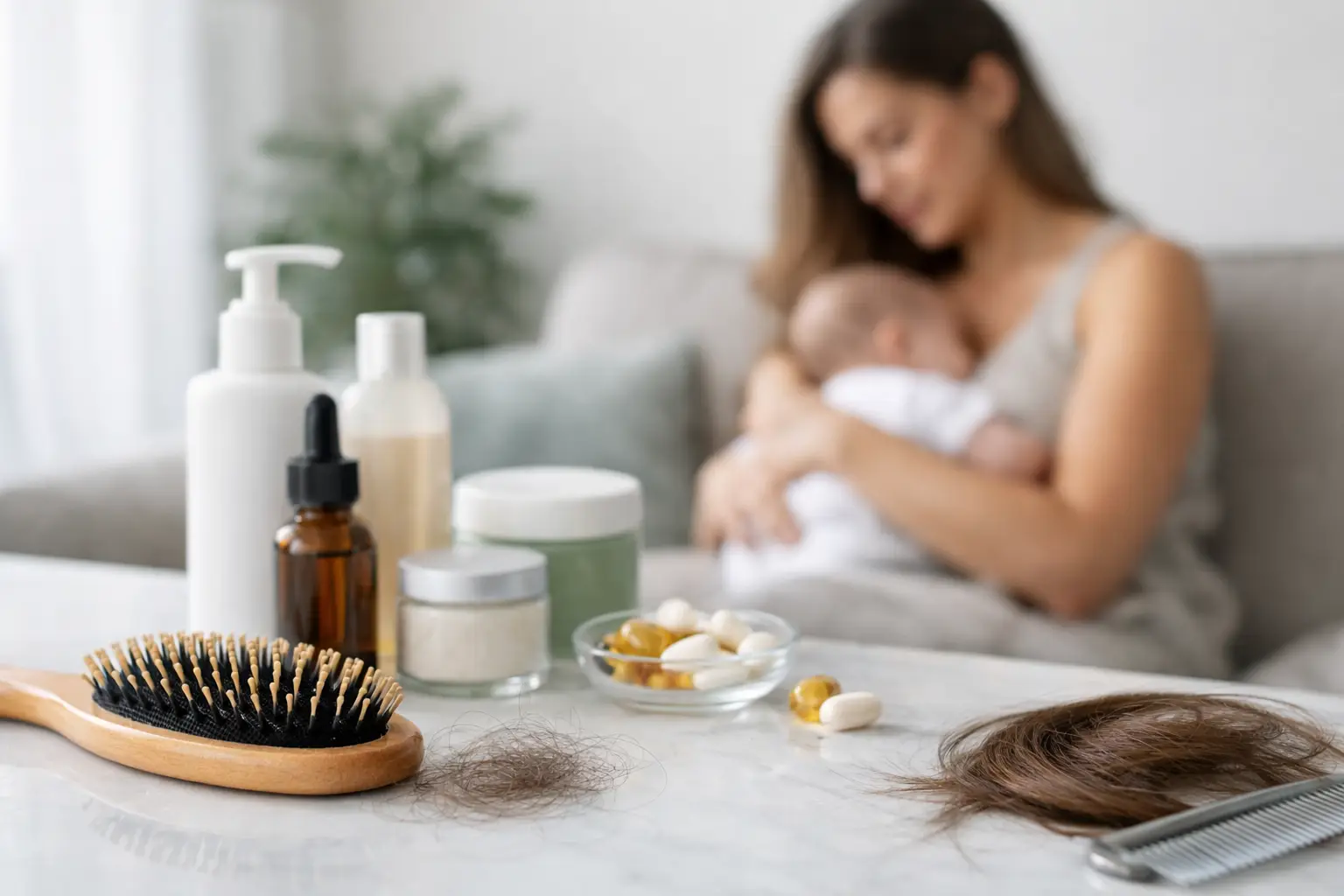
You notice it first in the shower. Then on your brush. Then in the ponytail that suddenly feels smaller than it did a month ago. If you are searching for the best products for postpartum shedding, you are not overreacting – and you are not alone. Postpartum hair loss can feel dramatic, even when it is common, and the right routine can make the regrowth phase feel a lot more manageable.
Postpartum shedding usually starts a few months after birth, when estrogen levels drop and the hair that stayed in its growth phase during pregnancy begins to release. That means the goal is not to panic-buy every hair product on the market. It is to choose products that support the scalp, protect fragile strands, and help your hair look fuller while it recovers.
What actually helps with postpartum shedding
The best products for postpartum shedding usually work in three lanes at once. First, they support the scalp, because healthy growth starts there. Second, they reduce breakage, since not every hair you lose is true shedding. Third, they help improve the look and feel of density so you can get through this phase with a little more confidence.
That is why single-product fixes often disappoint. A shampoo alone rarely changes the full picture. A supplement without scalp care can leave gaps. And styling products that only coat the hair may give quick volume, but they do not address the stress your scalp and strands are under after pregnancy.
Scalp serums are one of the best products for postpartum shedding
A targeted scalp serum is often the smartest place to start. After postpartum shedding begins, the scalp can benefit from gentle, consistent nourishment that supports the environment where hair grows. Look for lightweight formulas with botanical oils and plant-based ingredients that do not leave a greasy film behind.
Rosemary is one ingredient that gets plenty of attention for good reason. It is popular in hair wellness because it helps energize the scalp and fits easily into a daily routine. A well-made rosemary scalp treatment can be especially useful if you want a natural option that feels simple, not clinical.
Texture matters here. If a serum is too heavy, you will stop using it. If it irritates the scalp, it is the wrong fit – especially during the postpartum period, when skin can feel more sensitive than usual. The best choice is something you can apply consistently without turning hair care into a chore.
Thickening sprays help when your hair feels instantly thinner
There is the long game, and then there is getting through the week without hating your hair. That is where thickening sprays earn their place. They do not stop postpartum shedding by themselves, but they can make fine, flat hair look fuller right away and help fragile strands appear more substantial.
A good thickening spray should do more than create stiffness. It should add body, support styling, and help reduce the limp, see-through look that often shows up around the hairline and crown. If your hair is already dry from postpartum hormone shifts, avoid anything that leaves it crunchy or dull.
This is also where trade-offs matter. Some volumizing products deliver dramatic lift but can leave buildup behind, which is not ideal if your scalp already feels stressed. Others are lighter and more wearable every day, even if the result is a little softer. For most new moms, easier daily use wins.
Supplements can support hair wellness from the inside
Hair is not the first thing your body prioritizes after pregnancy. Recovery, sleep disruption, and shifting nutrition can all show up in your hair routine. That is why supplements are often included among the best products for postpartum shedding.
A hair-focused gummy or capsule with biotin and other supportive nutrients can be a helpful part of a broader routine. The key word is part. Supplements are not magic, and they do not replace eating enough, managing stress where possible, or checking with your doctor if shedding feels extreme or lasts longer than expected.
This is especially important postpartum because needs vary. If you are breastfeeding, recently stopped breastfeeding, or taking other supplements, it is worth checking ingredient compatibility before adding anything new. A product can be high quality and still not be the right match for your current stage.
Gentle cleansing matters more than people think
Many women focus only on growth products and overlook wash day. But a harsh shampoo routine can make postpartum hair feel even worse. When hair is shedding and regrowth is just starting, strands are often more prone to tangling, dryness, and snap-off.
Choose a shampoo that cleans the scalp without stripping it, and pair it with a conditioner that adds softness without weighing everything down. If your roots get oily fast but your ends feel dry, that is normal. You may need to wash the scalp thoroughly while being more generous with conditioner through mid-lengths and ends.
The best cleansing routine is usually boring in the best way. It keeps the scalp fresh, helps treatments apply better, and makes hair easier to detangle. That consistency can do more for your hair than constantly switching products.
The best products for postpartum shedding also reduce breakage
Postpartum shedding gets blamed for every strand on the floor, but breakage can quietly make the problem look worse. If you are wearing tight buns to keep hair out of the way, heat styling to fake volume, or brushing too aggressively through tangles, some of what you are seeing may be snapped hair rather than shed hair.
That is why leave-in products with smoothing and strengthening benefits deserve attention. A lightweight leave-in conditioner or protective styling spray can help reduce friction, improve manageability, and keep fragile strands from breaking mid-shaft. This matters even more if your hair is color-treated or naturally textured.
Think of it this way: supporting new growth is one side of the equation, but keeping the hair you still have looking healthy is the other. Both matter if your goal is fuller-looking hair.
A simple 3-step routine usually works better than a crowded shelf
When you are sleep-deprived and stretched thin, complicated routines do not last. The most effective postpartum hair routine is usually the one you can repeat without thinking too hard about it.
A practical approach looks like this: use a scalp treatment daily or several times a week, apply a thickening product when styling, and add a supportive supplement if it fits your needs. That kind of internal and external system is easier to stick with and tends to cover the biggest concerns at once.
This is one reason complete routines often outperform random single-product shopping. You are not just masking the thinning. You are supporting the scalp, helping hair look fuller now, and giving your body nutritional backup at the same time. Brands like ROXIHAIR have leaned into this kind of simple system for a reason – it matches how real people actually use products.
When to be patient and when to get checked
Most postpartum shedding improves with time, but timelines vary. Some women see regrowth start to fill in within months, while others feel like they are waiting longer than expected. The front hairline and temples can be especially frustrating because they are so visible.
If shedding is intense, continues well beyond the first year postpartum, or comes with symptoms like fatigue, scalp pain, or patchy loss, it is worth talking to a healthcare provider. Iron issues, thyroid changes, and other postpartum shifts can overlap with hair changes. Products can support your routine, but they are not a substitute for medical guidance when something feels off.
How to choose products you will actually keep using
The best products for postpartum shedding are not necessarily the trendiest ones. They are the ones that feel safe, simple, and realistic for your life right now. Look for formulas that are easy to apply, gentle on the scalp, and designed to work together instead of competing for space in your bathroom.
Natural ingredients are a strong selling point, but they are not the whole story. You also want products that fit your texture, your styling habits, and your tolerance for effort. If you need something mess-free because your mornings are chaos, that matters. If you want visible cosmetic fullness while waiting for regrowth, that matters too.
Your hair is not ruined. It is moving through a phase, and phases respond better to steady support than panic. Give your scalp care, protect the strands you have, and choose products that make it easier to stay consistent. Sometimes that is exactly how fuller, healthier hair starts showing up again.