

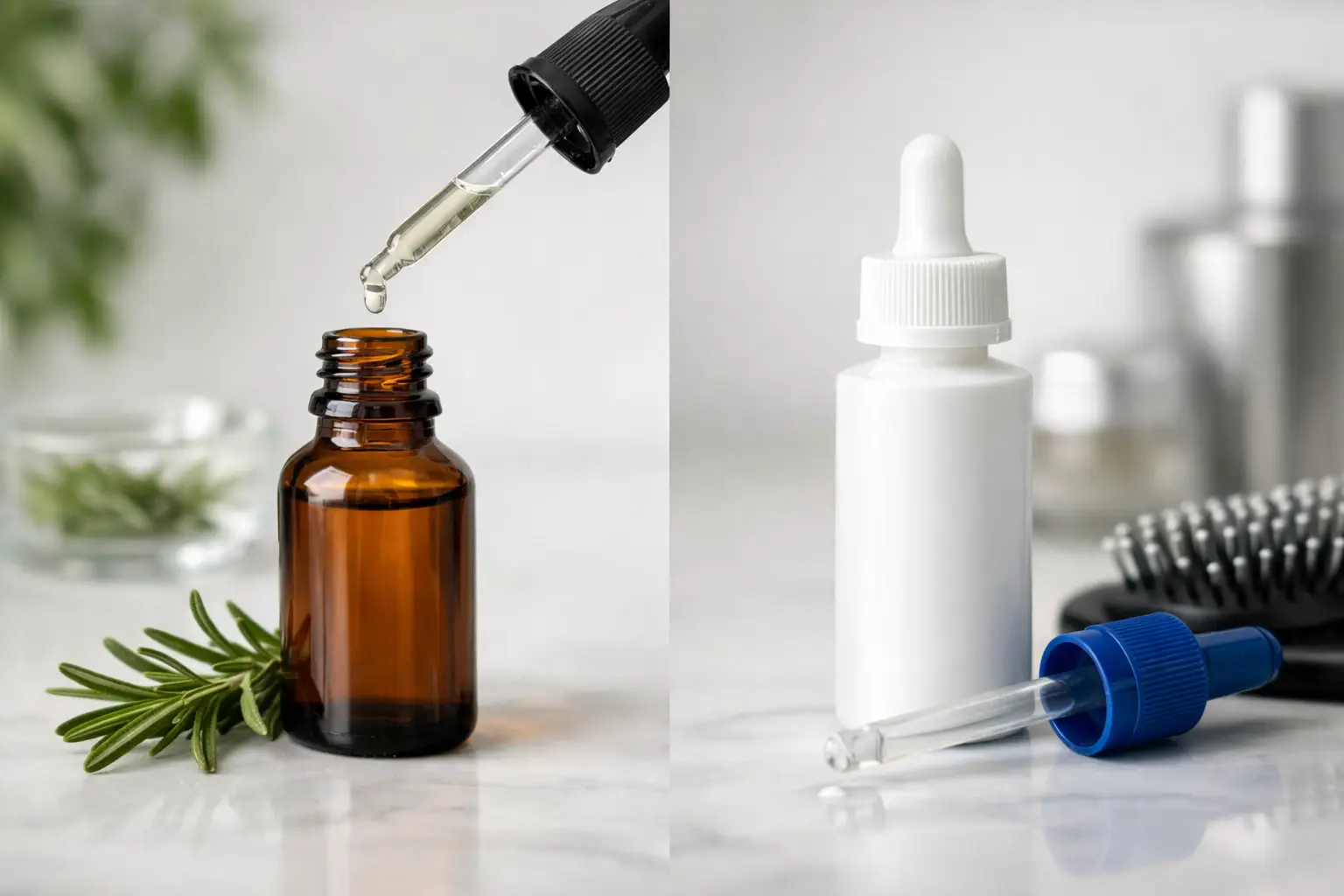
Your hairbrush is collecting more strands, your part looks wider, and the products that once gave you volume are no longer doing enough. When comparing rosemary drops vs minoxidil results, the real question is not which option sounds better. It is which routine you can use consistently, comfortably, and confidently long enough to support healthier-looking hair.
Minoxidil is the better-studied choice for certain types of hair loss. Rosemary scalp drops appeal to people who want a more natural, wellness-centered approach to scalp care. Both can have a place in a thinning-hair routine, but they do not work in exactly the same way, and neither creates overnight transformation.
Rosemary Drops vs Minoxidil Results: The Big Difference
Minoxidil is an over-the-counter medication approved by the FDA for hair regrowth in specific forms of pattern hair loss. It is available in liquid and foam formulas, usually in 2% or 5% strengths. It works by extending the growth phase of the hair cycle and supporting follicle activity. For people with androgenetic alopecia, also called hereditary pattern thinning, it has a significant body of research behind it.
Rosemary drops are typically scalp treatments made with rosemary essential oil or rosemary leaf extract blended into a carrier oil, serum, or water-based formula. Their purpose is to nourish the scalp, support circulation, and create a healthier environment for hair growth. Rosemary is not an FDA-approved hair-loss medication, but it is a popular ingredient for people who want to avoid a medicated daily treatment.
The key difference is evidence and intensity. Minoxidil is more clinically established for pattern hair loss. Rosemary drops are a gentler, more flexible self-care option that may help support scalp health, reduce the appearance of dryness-related shedding, and complement a broader hair wellness routine.
What Results Can You Realistically Expect?
Hair grows slowly. Most people grow roughly half an inch of hair per month, so every treatment claiming to support growth needs time to show up in the mirror. Better results are often first noticed as less shedding, stronger-feeling strands, improved scalp comfort, or more volume around the roots. Visible density changes take longer.
Minoxidil results and timeline
With consistent use, some people notice early changes in shedding or hair texture within two to three months. More meaningful changes in density often require four to six months, and full assessment can take up to 12 months. Results vary based on your genetics, the cause of your thinning, how long the hair loss has been happening, and whether follicles are still active.
One frustrating possibility is an initial shedding phase. Because minoxidil can shift follicles through the hair cycle, older hairs may shed before new growth becomes noticeable. This can be alarming, especially when you are already worried about hair fall. It does not happen to everyone, but it is one reason people stop too soon.
Minoxidil also requires continued use to maintain benefits. If you stop, the hairs supported by the treatment may gradually return to their previous cycle over the following months.
Rosemary drops results and timeline
Rosemary drops usually deliver a more gradual experience. Many users focus first on scalp massage, consistency, and improving the condition of hair that is already growing. If your shedding is connected to scalp stress, buildup, dryness, frequent heat styling, or breakage, a nourishing scalp routine may make hair look healthier and fuller over time.
There has been limited research suggesting rosemary oil may perform similarly to 2% minoxidil over a six-month period in a small study. That is encouraging, but it is not enough to say that every rosemary formula will match minoxidil, especially for advanced hereditary hair loss. Formula quality, concentration, application technique, and the underlying cause of thinning all matter.
Give rosemary drops at least three to six months of steady use before judging them. Take photos in the same lighting once a month. Daily mirror checks can make real progress hard to see.
Which Option Fits Your Hair Concern?
Minoxidil may be the more direct option if you have a diagnosed pattern of hair thinning, a receding hairline, thinning at the crown, or a family history of progressive hair loss. It can also be a sensible choice if you want the option with the strongest clinical track record and are comfortable with a medicated routine.
Rosemary drops may be a better fit if your goal is a natural scalp-care ritual, if you are concerned about harsh-feeling products, or if your hair is dealing with breakage and scalp dryness alongside shedding. They are especially appealing for people who want to build a fuller routine around scalp massage, gentle cleansing, heat protection, and nutrition rather than relying on one active ingredient alone.
The answer can also be both, but only with care. Some people use minoxidil as their primary regrowth treatment and rosemary drops on separate times of day as a nourishing scalp treatment. Do not layer multiple products without thinking about irritation. A sensitive, inflamed scalp is not the foundation for your best hair.
Side Effects and Daily Routine Trade-Offs
Minoxidil is effective for many users, but it is not effortless. The liquid version can leave residue, and some formulas can cause dryness, itching, flaking, redness, or contact irritation. Foam may feel lighter for some hair types. Unwanted facial or body hair can occur if product transfers beyond the scalp. Rare but more serious symptoms, including chest pain, rapid heartbeat, dizziness, or swelling, need medical attention.
Rosemary drops can feel more aligned with a clean beauty routine, but natural does not automatically mean irritation-free. Undiluted essential oil can burn or sensitize the scalp. Choose a properly formulated product, follow its instructions, and patch test before using it broadly. Stop using any product that causes persistent burning, rash, or worsening flakes.
Convenience matters more than people admit. A treatment that sits unused in your bathroom will not help your hair. If minoxidil makes your scalp feel uncomfortable or interferes with your styling routine, consistency may suffer. If rosemary drops feel good but you need stronger support for progressive pattern loss, a natural-only plan may not meet your goal. Be honest about what your hair needs and what you will truly maintain.
Build a Routine That Supports More Than the Scalp
Hair thinning rarely feels like just a scalp issue. It changes how you style your hair, how often you wear it up, and how confident you feel under bright lighting. That is why a complete approach can make a meaningful difference.
Start with your scalp treatment, whether that is rosemary drops, minoxidil, or a plan approved by a dermatologist. Apply to a clean, dry or nearly dry scalp according to product directions, focusing on areas where you see thinning rather than coating every strand. A gentle two- to five-minute massage can make the ritual feel more intentional while helping distribute a scalp serum evenly.
Then protect the hair you already have. Excessive bleaching, tight styles, hot tools, rough towel drying, and aggressive brushing can turn fragile strands into visible breakage. A thickening spray can improve the appearance of body and density while helping fine hair look more polished between wash days. It is cosmetic support, not a substitute for follicle treatment, but it can make the waiting period much easier.
Internal support matters too. Your body needs adequate protein, iron, vitamin D, zinc, and other nutrients to maintain healthy hair growth. Biotin is not a cure for hair loss, and it is most useful when a deficiency is present, but a well-rounded nutritional routine can support overall hair wellness. If you have sudden, severe, or unexplained shedding, ask a healthcare professional about possible causes such as thyroid changes, anemia, stress, medication effects, or hormonal shifts.
For people who want a simple at-home system, ROXIHAIR pairs organic rosemary scalp drops with strand-supporting and nutritional steps designed to make the routine easier to stick with. The best routine is the one that addresses your actual concern without creating more stress around your hair.
When You Should See a Professional
Do not self-treat indefinitely if hair loss is rapid, patchy, painful, or accompanied by scalp scaling, inflammation, or illness. Those signs can point to conditions that need diagnosis and targeted treatment. The same applies if you are pregnant, breastfeeding, managing heart conditions, taking medications, or considering minoxidil for the first time.
A dermatologist can help identify whether you are experiencing pattern loss, telogen effluvium, alopecia areata, traction alopecia, scalp disease, or another cause. That clarity can save months of trying products that were never suited to your situation.
Your healthiest next step may be rosemary drops, minoxidil, or a thoughtful combination of professional guidance and daily hair care. Give your routine time, track your progress with patience, and choose the approach that helps you care for your scalp and confidence every day.