
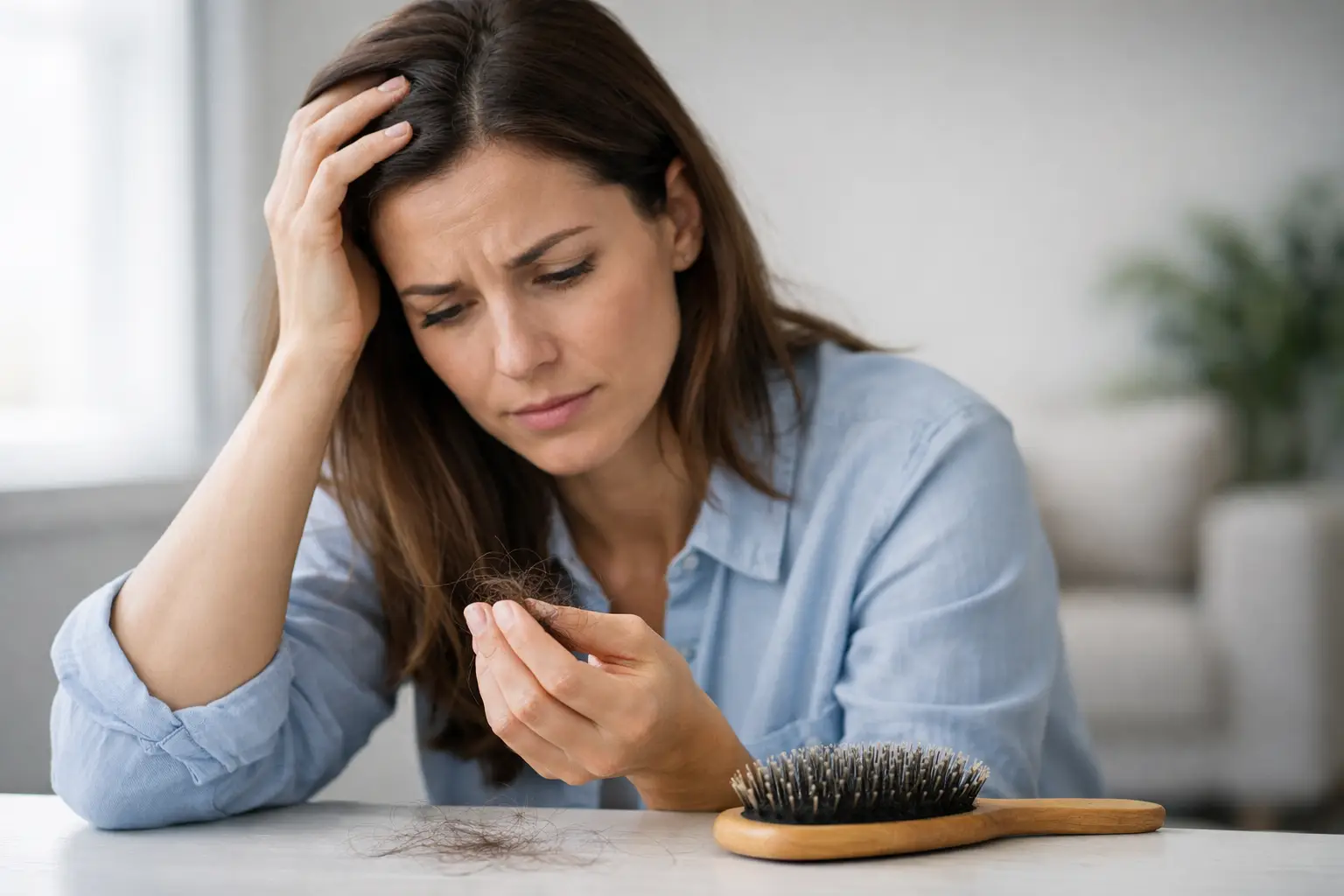
The extra hair in your shower drain may feel like one more thing to worry about after a difficult few months. And that worry can quickly become a cycle. Can stress make hair fall out? Yes. Significant physical or emotional stress can trigger noticeable shedding, often weeks or months after the stressful event. The encouraging part is that stress-related shedding is commonly temporary, and a steady scalp and hair-care routine can help you feel more in control while your body resets.
Can Stress Make Hair Fall Out? Yes, Through Shedding
Your hair does not all grow at the same pace. Each strand moves through a natural cycle: active growth, a transition phase, rest, and then release. Usually, only a small percentage of hairs are resting at one time, so daily shedding is easy to miss.
When your body experiences a major disruption, more hairs can shift into the resting phase early. This is called telogen effluvium. About two to three months later, those resting hairs begin to shed. That delayed timing is why many people do not connect their hair fall to the original trigger right away.
Stress can mean a demanding work period, grief, relationship changes, poor sleep, financial pressure, a high fever, surgery, rapid weight loss, illness, or a major hormonal shift. Your body does not always separate emotional stress from physical stress. Both can affect the systems that support normal hair growth.
Stress shedding usually looks like diffuse thinning. You may see more strands on your pillow, in your brush, or circling the shower drain, and your ponytail may feel less full. It typically does not create one perfectly round bald patch. If you are noticing sudden patchy loss, scalp pain, scaling, or inflammation, that deserves a conversation with a dermatologist or healthcare professional.
Why Hair Loss Can Feel Worse During Stressful Seasons
Stress-related shedding is real, but it is not always the only thing happening. A stressful season can change everyday habits that influence how hair looks and feels. You may skip meals, eat less protein, sleep poorly, postpone washing your hair, wear a tight bun for convenience, or reach for more heat styling because you need to get ready fast.
Those habits can add breakage on top of shedding. Breakage happens along the hair shaft, while shedding releases a full strand from the follicle, often with a tiny white club at one end. Both can leave hair looking thinner, but they need different kinds of support.
Color processing, bleach, frequent hot tools, tight extensions, and aggressive brushing do not usually cause telogen effluvium. They can, however, make already fragile strands snap more easily. The result is less volume and a more uneven appearance just when you want your hair to look its best.
There is another trade-off worth knowing: washing less often does not stop shedding. It may simply allow loose hairs to build up until wash day, when the amount in your hands looks alarming. Gentle, regular cleansing helps keep the scalp comfortable and makes it easier to notice changes without panic.
What Stress-Related Hair Fall Usually Looks Like
The pattern matters. Telogen effluvium often begins suddenly, but the trigger may have happened months earlier. It tends to affect the whole scalp rather than only the temples or crown. You may notice hair feels less dense near the part line, but the scalp itself generally looks normal.
Many people see improvement once the trigger settles and the growth cycle restarts. Shedding may taper gradually rather than stopping overnight. New growth can appear as short hairs around the hairline or part, although texture and timing vary from person to person.
Stress can also uncover a separate pattern of thinning that was already developing. For example, hereditary thinning often concentrates around the part, crown, or hairline and tends to progress slowly. A period of stress may make it more noticeable, but stress may not be the full explanation.
That is why it helps to look at the complete picture: your recent health history, family pattern, medications, diet, hormones, styling routine, and how long the shedding has lasted. Clear answers are better than assuming every strand is caused by stress alone.
How to Support Hair When You Are Under Pressure
You cannot force every follicle back into growth immediately. What you can do is stop piling extra stress onto your scalp, strands, and routine. Consistency beats a cabinet full of random products.
Start with the basics that make a difference over time: eat regular meals with adequate protein, stay hydrated, aim for restorative sleep, and choose a stress outlet you can realistically repeat. A 10-minute walk, a screen-free wind-down, breathing exercises, or a conversation with someone you trust may sound simple, but your routine needs to be sustainable to help.
Give your scalp gentle attention, too. Use the pads of your fingers to massage your scalp instead of scratching with nails. Avoid harsh scrubbing and skip heavy tension from tight ponytails, braids, and slicked-back styles when your scalp feels tender. If you use heat, lower the temperature and use it less often while your hair is vulnerable.
A focused at-home routine can make this process easier. ROXIHAIR’s three-step approach pairs organic rosemary scalp drops for scalp nourishment, a thickening spray for instant fuller-looking strands and daily protection, and biotin gummies for internal support. Natural ingredients and a simple routine are not a substitute for medical care when you need it, but they can be a practical way to care for your hair without adding harsh, complicated steps to an already stressful day.
Be patient with visible results
Hair growth is slow by nature. A product that makes hair look thicker can give you an immediate confidence boost, while follicle-level changes take longer to show. Take photos of your part and hairline in the same lighting every four weeks instead of judging progress every morning. It is one of the clearest ways to spot gradual improvement.
Also, resist the urge to switch products every few days. Introducing multiple new treatments at once can irritate your scalp and makes it hard to know what is helping. Keep your routine gentle, follow directions, and give it time.
When It Is Time to See a Professional
A clinician can help rule out causes of hair loss that need more than stress management and cosmetic support. Consider making an appointment if shedding lasts longer than six months, feels severe, or keeps getting worse. It is also wise to get checked if you have fatigue, unexplained weight changes, irregular periods, new medications, a restrictive diet, or symptoms of thyroid or iron issues.
Seek care sooner for round bald patches, eyebrow loss, burning, itching, redness, thick scale, or scarring. These signs can point to conditions that benefit from targeted treatment. If hair fall began after childbirth, a serious illness, surgery, or a major medication change, mention the timing clearly. That timeline gives your provider useful clues.
You do not have to wait until your hair loss feels overwhelming to ask for help. Getting a professional perspective can reduce uncertainty, which is often one of the biggest sources of stress in the first place.
A Better Way to Respond to Stress Shedding
Seeing more hair fall can make you want a fast fix. But the most effective response is usually calm, consistent care: address the source of stress where possible, protect the hair you have, nourish your body, and pay attention to patterns that call for medical support.
Your hair is not failing you. It may be signaling that your body has been carrying a lot. Give yourself the same patience and care you want to give your strands, then build a routine that helps you feel stronger each time you look in the mirror.




Leave a Reply