
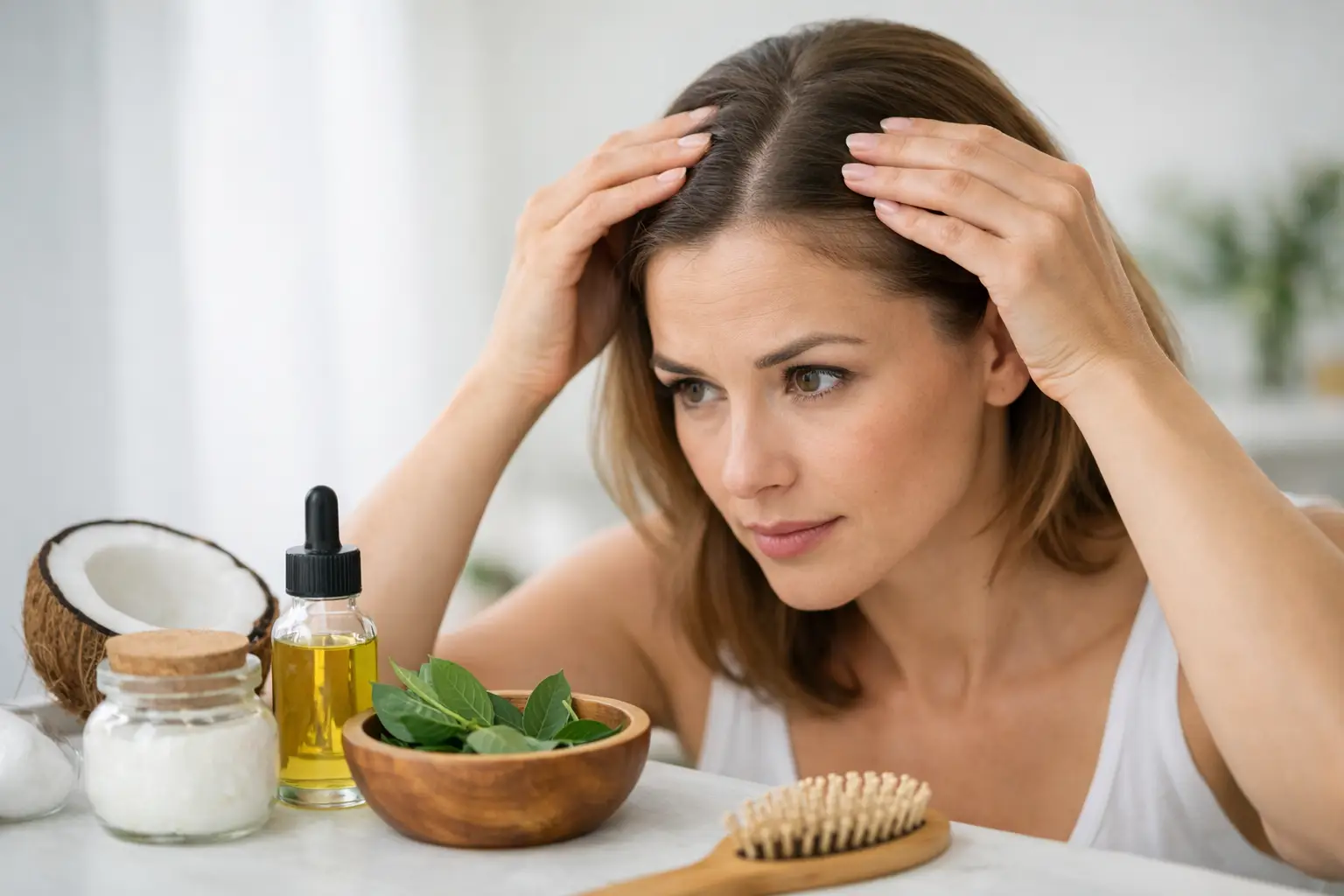
If your ponytail feels smaller, your part looks wider, or your brush is collecting more hair than usual, you do not need another vague promise. You need a plan that makes sense. If you are wondering how to stop hair thinning naturally, the real answer is not one miracle ingredient. It is a consistent routine that supports your scalp, protects fragile strands, and gives your body the nutrients it needs to grow stronger hair.
Hair thinning usually builds slowly. A little more shedding after the shower. More scalp showing under bright light. Ends that look weaker and break faster than they used to. That is why the best natural approach is not panic buying random products. It is fixing the everyday stressors that quietly work against hair growth.
Why hair starts thinning in the first place
Hair does not thin for just one reason. For some people, it is genetics. For others, it is stress, hormonal shifts, tight styling, heat damage, poor scalp health, nutrient gaps, or months of overprocessing from bleach and color. Sometimes it is a mix of all of them.
That matters because natural hair support works best when it matches the cause. If your scalp is inflamed and flaky, scalp care deserves attention first. If your hair is snapping from styling damage, no scalp oil alone will fix that. If your body is run down, your hair often shows it.
The good news is that thinning hair is not always permanent. In many cases, hair can look fuller and feel stronger when you reduce breakage, calm the scalp, and support healthier growth over time.
How to stop hair thinning naturally with a daily routine
Natural results usually come from simple habits repeated consistently. The routine does not need to be complicated, but it does need to be complete.
Start with your scalp
A healthy scalp gives hair a better place to grow. When the scalp is dry, irritated, oily, or clogged with buildup, hair can look flatter and weaker even before actual shedding becomes obvious.
Massage your scalp for a few minutes each day using your fingertips, not your nails. This helps stimulate circulation and can also loosen residue from styling products and excess oil. If you use a scalp treatment, choose one with plant-based ingredients known for scalp support, such as rosemary. Lightweight formulas are usually easier to stay consistent with because they do not leave hair greasy or hard to style.
This is where many people quit too early. A natural scalp routine is not an overnight fix. It is more like giving your hair a better environment week by week.
Be gentler with wet hair
Wet hair stretches more easily and breaks faster. If your thinning is partly breakage, your wash routine may be making it worse without you realizing it.
Use a soft towel or cotton T-shirt to blot, not rub. Detangle from the ends up with a wide-tooth comb. Skip aggressive brushing right out of the shower. If you heat style, use lower temperatures and keep it occasional when possible. Hair that stays on your head because it is not breaking is part of the fullness you are trying to protect.
Rethink tight styles and daily tension
A sleek bun can look polished, but repeated tension at the hairline and crown can lead to thinning over time. The same goes for tight ponytails, heavy extensions, and styles that pull in the same area every day.
If you wear your hair up often, rotate styles and loosen the tension. Give your scalp recovery days. Natural hair care is not just what you apply. It is also what you stop doing repeatedly.
Nutrition matters more than most people think
Hair is not essential tissue, which means your body will prioritize more important functions first. When nutrition is off, hair growth can slow, shedding can increase, and strands can become weaker.
Protein matters because hair is made mostly of keratin, a protein structure. Iron, zinc, biotin, vitamin D, and other nutrients also play a role in normal hair function. That does not mean every person with thinning hair has a major deficiency, but it does mean crash dieting, low-protein eating, and inconsistent meals can show up in your hair.
A food-first approach is smart. Build meals around protein, healthy fats, leafy greens, beans, eggs, berries, nuts, seeds, and iron-rich foods. If your diet is inconsistent or you want a simpler daily support step, a quality hair wellness gummy or supplement can make your routine easier to maintain. The key is regular use. Taking something for four days and forgetting it for two weeks will not do much for your hair.
Stress and hair thinning are closely connected
Stress shows up everywhere, including your scalp. It can push more hairs into a shedding phase, trigger scalp irritation, and make existing thinning feel worse.
That does not mean you can meditate your way out of every hair problem. But it does mean stress support belongs in the conversation. Better sleep, daily walks, light exercise, breathwork, and reducing high-tension habits can all help support healthier hair cycles.
If your shedding seemed to ramp up after a major life event, illness, intense dieting, or burnout, that timing is worth paying attention to. In those cases, natural recovery may take patience. Hair often needs a few months to catch up after the body has been under strain.
What natural ingredients can actually help?
Natural does not automatically mean effective, but some ingredients have earned their place in a thinning-hair routine.
Rosemary is one of the most talked-about options for a reason. It is commonly used to support scalp circulation and create a healthier foundation for growth. Peppermint, castor oil blends, biotin, and plant-based scalp soothers can also be useful depending on the formula.
What matters most is not chasing every trendy ingredient at once. It is choosing a few supportive products that cover the basics – scalp nourishment, strand protection, and internal support. A coordinated system is often easier to stick with than a bathroom shelf full of half-used bottles.
That is why many people do better with a three-part routine instead of random product hopping. A scalp drop can target the roots, a thickening spray can help hair look fuller while protecting fragile strands, and a daily gummy can support the inside-out side of the process. ROXIHAIR is built around that exact kind of at-home routine, which is helpful if you want structure instead of guesswork.
How to stop hair thinning naturally without wasting time
The biggest mistake is trying too many things for too little time. Hair growth is slow. Even when a routine is working, visible change usually comes in stages. First, shedding may look less dramatic. Then hair may feel stronger, softer, or easier to style. Volume often improves before length does.
Give a natural routine a fair trial. Think in weeks and months, not days. Take photos in the same lighting every couple of weeks so you can track progress honestly. Memory is unreliable, especially when you are worried about your hair.
It also helps to separate hair thinning from hair breakage. If you see short broken pieces around your crown or hairline, focus heavily on damage control. If you notice more shedding from the root and widening areas of scalp, scalp support and internal wellness may need more attention.
When natural support may not be enough
There is room for honesty here. Sometimes thinning is tied to medical, hormonal, or scalp conditions that need professional evaluation. If your hair loss is sudden, severe, patchy, painful, or paired with fatigue or other body changes, it is smart to check in with a medical professional.
Natural care can still be part of your routine, but it should not replace getting answers when something feels off. The strongest plan is often the one that combines smart home care with real clarity about what is driving the thinning.
The habits that make the biggest difference
If you want fuller-looking hair naturally, consistency beats intensity. Support your scalp. Be gentler with your strands. Eat like your hair depends on it, because in many ways it does. Lower the daily stress load where you can. And stick with a routine long enough to let it work.
You do not need harsh products or a complicated 12-step system to make progress. You need a routine you will actually use. Hair responds to care, but it responds best to care that keeps showing up. Start there, stay steady, and give your hair a real chance to come back stronger.