

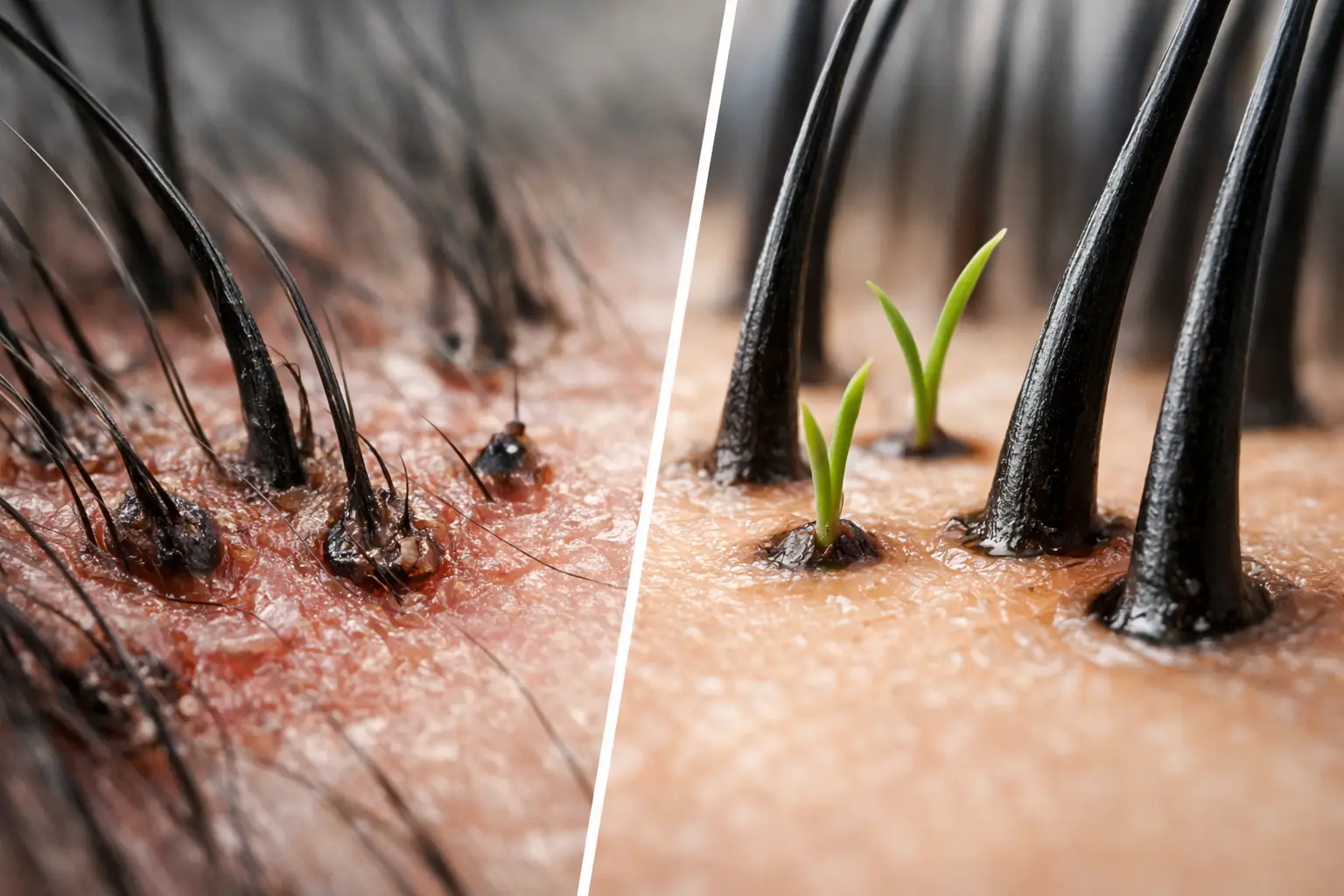
If your hairline looks thinner, your part seems wider, or your strands break faster than they used to, the question gets personal fast: can damaged follicles grow hair again? Sometimes yes. Sometimes no. The real answer depends on what kind of damage happened, how long it has been going on, and whether the follicle is still alive and capable of producing a new strand.
That distinction matters more than most people realize. A stressed follicle is not the same as a dead follicle. Hair that is shedding is not the same as hair that has stopped growing forever. And if you have been cycling through random shampoos, oils, supplements, and styling hacks without clear results, this is where things get clearer.
Can damaged follicles grow hair again or not?
Hair follicles can often recover when they are weakened, inflamed, clogged, or under stress. They are far less likely to recover when they have been permanently scarred or destroyed. In plain terms, if the follicle is dormant, irritated, or miniaturized, there may still be a path back to stronger growth. If scar tissue has replaced the follicle, regrowth is much less likely.
This is why two people can both say they are “losing hair” and have completely different outcomes. One may be dealing with temporary shedding after stress, poor nutrition, postpartum changes, or overprocessing. The other may have long-term pattern thinning or a scarring condition that needs medical attention. Same symptom, different root cause.
A healthy follicle moves through a cycle of growth, rest, and shedding. When that cycle gets disrupted, hair can become thinner, shorter, weaker, or slower to come back. The good news is that many follicles are not truly gone. They are underperforming.
What damaged follicles actually look like
Follicle damage is not always dramatic. In many cases, it shows up as gradual change. Hair may start growing back finer than before. You may notice more scalp visibility under bright light. Ponytails feel smaller. Edges look sparse. Hair seems to stall at a certain length because it sheds before it has time to grow strong.
Damage can come from repeated tension, harsh chemicals, scalp inflammation, buildup, hormonal shifts, chronic stress, poor scalp circulation, or nutrient gaps. Heat styling and bleaching usually damage the hair shaft first, but over time they can also contribute to a scalp environment that makes strong growth harder.
Then there is miniaturization. This is common in pattern hair loss and happens when follicles shrink over time, producing thinner and shorter strands. Those follicles are not necessarily dead, but they are struggling. That is exactly why early action matters.
Signs a follicle may still recover
If you are seeing baby hairs, fine regrowth, uneven fill-in, or short new strands along thinning areas, that is often a positive sign. It suggests the follicle is still functioning, even if it is not performing at full strength.
Other signs point in the same direction. If hair loss started recently, if shedding increased after a stressful period, if your scalp feels irritated or flaky, or if your thinning is diffuse rather than completely bare and smooth, there may still be active follicles worth supporting. Recovery is rarely instant, but it can happen.
What you do not want is to mistake delayed growth for permanent loss. Hair moves slowly. Even when a follicle begins recovering, visible improvement can take weeks to months, not days.
When regrowth is less likely
There are situations where the answer to can damaged follicles grow hair again is probably not on their own. If follicles have been destroyed by scarring alopecia, severe burns, injuries, or long-standing inflammation that replaced tissue with scar tissue, natural regrowth becomes much less likely.
Very smooth, shiny bald patches with no visible tiny hairs can also be a warning sign, though not always. Areas that have been under constant traction for years may eventually stop producing hair. That is why tight braids, heavy extensions, and repeated tension around the hairline are not just styling issues. Over time, they can become follicle issues.
This is also where false hope can waste time. Natural hair care can support living follicles. It cannot resurrect follicles that no longer exist.
What helps damaged follicles recover
The best approach is simple: reduce what is hurting the follicle, improve the scalp environment, and support the body from the inside at the same time. Hair growth responds better to consistent support than to panic fixes.
Calm scalp stress first
An inflamed scalp is not an ideal place for healthy growth. If your scalp is itchy, oily, flaky, tight, or tender, start there. Inflammation can interfere with the follicle’s normal cycle and make shedding worse.
Scalp-focused treatments with botanical ingredients can help nourish the skin barrier and create a healthier foundation for growth. Rosemary is especially popular because it supports scalp circulation and is widely used in natural hair wellness routines. The key is consistency. A quality scalp treatment used regularly has a much better chance of helping than occasional, overloaded DIY routines.
Stop the habits that keep setting you back
You cannot out-serum a damaging routine. If hair is already thinning, keep tension low, reduce high-heat styling, space out chemical services, and be gentler when detangling. Even the best growth routine gets slowed down if the scalp and strands are under daily stress.
This is where many people get frustrated. They start one good product but keep the same aggressive styling habits that caused the problem. Regrowth needs protection as much as stimulation.
Support growth internally
Follicles are active structures. They need nutrients to do their job well. If your diet has been inconsistent or you are under stress, hair may reflect it later. Biotin gets a lot of attention, but the bigger picture is overall nutritional support. Hair does not respond well to internal depletion.
That is one reason complete routines tend to make more sense than one-product thinking. When scalp care, strand protection, and nutritional support work together, you are covering more of the reasons hair may be struggling in the first place.
Protect the hair you still have
Regrowth is only part of the goal. Hair that is growing in needs help staying strong. Thickening and protective products can make hair look fuller while also reducing breakage, which matters because breakage can mimic slow growth.
This is especially useful if you color your hair, heat style often, or feel like your strands are getting weaker even when your scalp seems fine. Fuller-looking hair now and stronger retention over time is a smart combination.
How long does follicle recovery take?
Usually longer than people want, but not so long that you should ignore it. If a follicle is still active, early signs of improvement can show up within a few weeks as reduced shedding, less scalp irritation, or more manageable hair. Visible new growth typically takes longer.
Hair grows in cycles, and those cycles do not rush because you bought a new product on Monday. Most people need steady care for at least a few months to judge whether a routine is working. That can feel slow, but it is still far better than letting damage continue unchecked.
If you have been inconsistent, switching products every two weeks, or treating your hair only when it feels urgent, you may not have given your follicles a real chance to respond.
A realistic way to think about results
The goal is not magic. The goal is improvement. Some people can regain thickness in areas that recently started thinning. Others can reduce shedding, improve scalp health, and keep miniaturized follicles active longer. Some will see fuller-looking hair because they are growing healthier strands and breaking fewer of them.
That is still real progress.
For people dealing with permanent follicle loss, the path may look different. But for many men and women facing thinning, breakage, shedding, and stressed-out scalps, the answer is more hopeful than expected. Damaged does not always mean done.
A system-based routine can make that easier. Instead of relying on one product to do everything, a better strategy is to support the scalp, strengthen the hair fiber, and nourish the body at the same time. That is the logic behind brands like ROXIHAIR and why all-in-one routines resonate with people who are tired of guessing.
If your follicles are still alive, they need the right conditions, not more chaos. Give them consistency, give them support, and give the process enough time to show you what your hair can still do.