
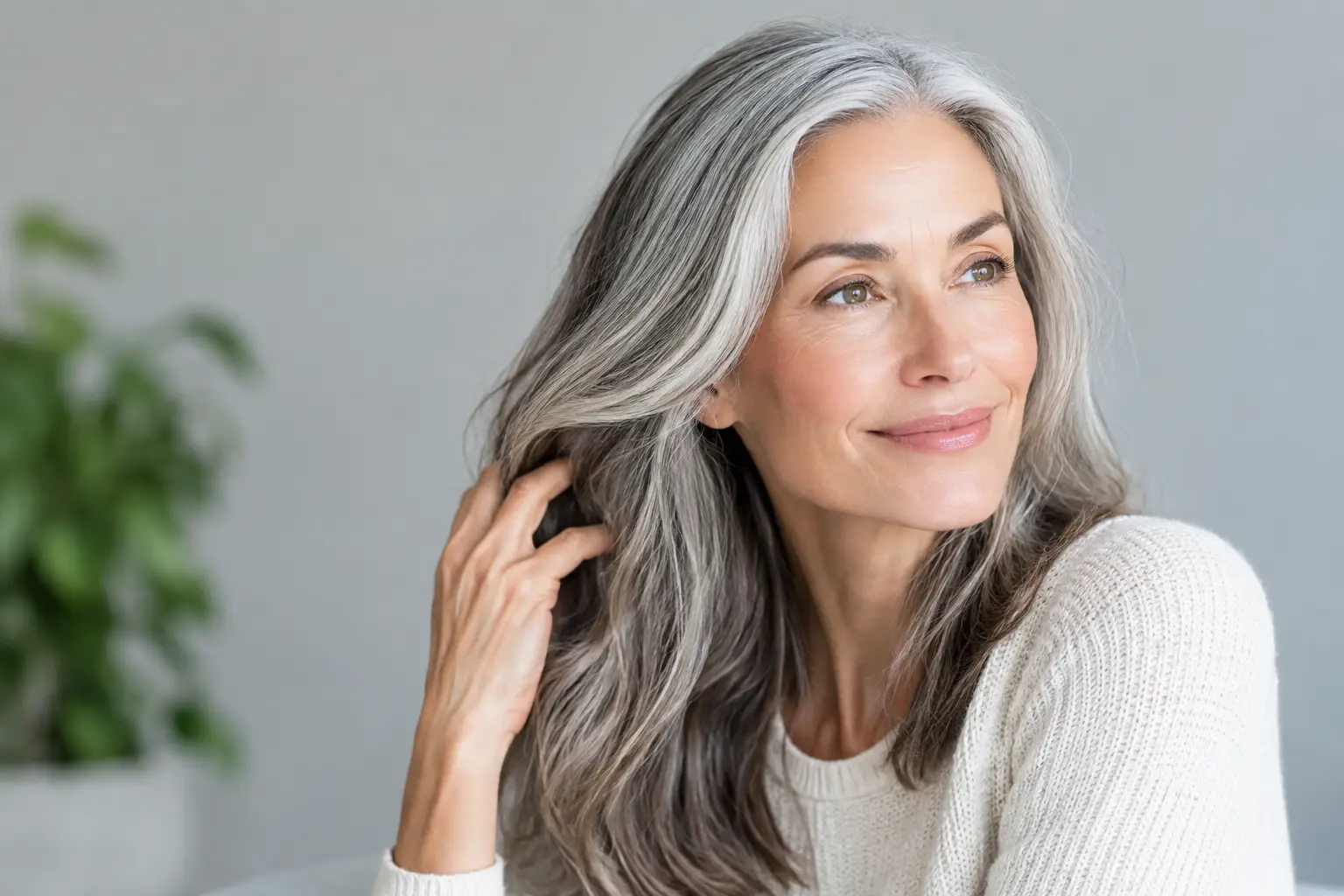
You may first notice it in the shower drain, in a wider part, or when your ponytail no longer feels as full as it once did. This guide to aging hair changes explains what is happening beneath those visible shifts and how to give your scalp and strands more consistent support. Aging hair is not a personal failure, and it does not mean you have to settle for hair that feels thin, dull, dry, or hard to manage.
Hair changes gradually, but they can feel sudden once they become visible. The good news is that a thoughtful routine can improve the look and feel of aging hair while helping protect the healthy strands you still have.
A Guide to Aging Hair Changes: What Is Normal?
As we age, the hair growth cycle can become less efficient. Each strand moves through growing, resting, and shedding phases. Over time, the active growth phase may shorten, while follicles may produce finer hairs than they did years earlier. That can make hair look less dense even when you are not experiencing dramatic shedding.
Hormones play a major role. For many women, pregnancy, perimenopause, menopause, thyroid changes, and shifts in estrogen can affect density, texture, and shedding. For men, sensitivity to DHT can gradually shrink certain follicles, often leading to recession around the temples or thinning at the crown. Genetics matter, but they are not the only factor shaping your hair.
Aging can also bring more dryness and breakage. The scalp may produce less natural oil, while years of heat styling, coloring, UV exposure, tight hairstyles, and chemical processing take a toll on the hair shaft. This is why someone can have a healthy number of follicles yet still feel like their hair has lost volume. Breakage can quietly steal fullness from the mid-lengths and ends.
Gray hair is another common change. Hair gets its color from pigment-producing cells in the follicle. When those cells slow down or stop producing pigment, new hair grows in silver, gray, or white. Gray hair often has a coarser or wirier feel, although it can also be fragile and dry. The change is natural, but the new texture may require a different care strategy.
The Most Common Signs of Aging Hair
Thinning is only one piece of the picture. You may also notice that your hair takes longer to grow, does not hold a style the same way, feels rougher after washing, or breaks before it reaches your preferred length. Your scalp may become more sensitive, flaky, or oily in places as well.
Pay attention to pattern and pace. A gradual change over years can be part of normal aging and genetics. A sudden increase in shedding, bald patches, scalp pain, burning, or hair loss after illness or a major medication change deserves a conversation with a dermatologist or healthcare professional. An at-home routine can support healthier-looking hair, but it should not replace medical care when something feels abrupt or unusual.
Why Your Hair May Look Thinner Even Without Major Hair Loss
Fine hair reflects light differently than thick hair, which can make the scalp more noticeable. Reduced oil production can leave strands less flexible and more likely to snap. If you frequently wear extensions, tight buns, braids, or slicked-back styles, constant tension can add stress around the hairline.
Hair color can also change how full hair appears. Strong contrast between gray roots and darker lengths can draw attention to the part, while very light coloring may make delicate hair look less substantial. There is no one right color choice, but a gentler coloring schedule and less aggressive bleaching can help preserve fragile strands.
Support Your Scalp First
Healthy-looking hair starts at the scalp. Think of it as the environment where every new strand begins. Product buildup, heavy oils, dry flakes, and irritation can make hair look flat while discouraging you from caring for your scalp consistently.
Cleanse often enough to keep your scalp comfortable, not so aggressively that it feels tight or stripped. The right frequency depends on your hair type, activity level, styling habits, and oil production. Someone with a very dry, textured hair type may wash less often than someone with fine hair and an oily scalp. What matters is finding a rhythm that leaves the scalp fresh and calm.
After cleansing, use a lightweight scalp treatment that is easy to apply directly where you need it. Rosemary-based scalp drops are a popular option for people who want a natural addition to their hair wellness routine. Massage gently with your fingertips for a minute or two. The goal is not to scrub hard. Consistency and a calm scalp matter more than intensity.
Avoid piling on products just because they promise growth. Heavy layers can leave fine hair limp, make the scalp feel congested, and turn your routine into something you skip. Choose products with a clear role: scalp support, strand protection, and nutritional support.
Build a Routine for Stronger-Looking Hair
The best routine is the one you can repeat. Aging hair responds better to steady care than to a cabinet full of products used once or twice. Start with the habits that protect the hair you have while creating a better foundation for new growth.
Use a thickening spray or lightweight styling treatment on damp or dry hair when you want immediate volume and a fuller appearance. Look for formulas that do not leave hair stiff, sticky, or coated. For finer strands, this can make a meaningful difference in how confident your hair looks between wash days.
Be strategic with heat. You do not have to give up your blow-dryer or curling iron, but lower temperatures, heat protection, and fewer passes over the same section can reduce unnecessary damage. Let hair air-dry partway when possible, and do not use a brush to forcefully pull through soaking-wet tangles. A wide-tooth comb and patience can save more length than an expensive trim schedule.
Nutrition also belongs in the conversation. Hair is not a vital organ, so the body may prioritize other systems when you are not getting enough protein, iron, vitamin D, zinc, or other nutrients. Biotin gummies can be a convenient part of a broader wellness routine, especially for those who prefer a simple daily habit. Still, more is not always better. If you suspect a deficiency or take medication, ask a healthcare professional before adding supplements.
A coordinated system makes this easier: one step for the scalp, one for the look and protection of your strands, and one for internal nutritional support. ROXIHAIR was designed around that practical approach, helping you build an at-home routine without relying on harsh treatments or complicated schedules.
Protect Aging Hair From Breakage
Aging hair can be more vulnerable at the lengths, particularly if it has been colored or heat-styled for years. This is where small changes create visible results. Swap rough towel rubbing for gently pressing out excess water. Use a satin or silk pillowcase if nighttime friction leaves your hair tangled. Choose looser styles, and vary where you place ponytails or clips so the same area is not under tension every day.
Regular trims help remove split ends, but they do not make hair grow faster from the root. Their value is prevention: fewer splits traveling upward means the ends can look fuller and healthier over time. If your goal is longer hair, preserving the length you grow is just as valuable as supporting the scalp.
Be cautious with dramatic DIY changes. At-home bleaching, frequent permanent color, chemical straightening, and high-heat styling can be especially unforgiving when hair is already fine or dry. You can still enjoy color and style, but gentler techniques and more time between processing sessions are often worth it.
When to Expect Results
Hair grows slowly, so realistic expectations protect you from frustration. Some benefits, such as softer texture, reduced breakage, easier styling, and more visible volume from a thickening product, can show up quickly. Changes in the appearance of density and new growth typically require more patience because the hair cycle takes time.
Take photos of your part line, hairline, and crown in the same lighting once a month. Daily mirror checks can make it hard to see gradual progress. Photos give you a fairer view of whether your routine is helping and remind you that steady care is doing more than a one-day transformation ever could.
Your hair will change with age, but your confidence does not have to change with it. Give your scalp attention, protect fragile strands, and choose a routine you can keep showing up for. The goal is not to chase the hair you had at 22. It is to help the hair you have now look stronger, fuller, and cared for.




Leave a Reply