

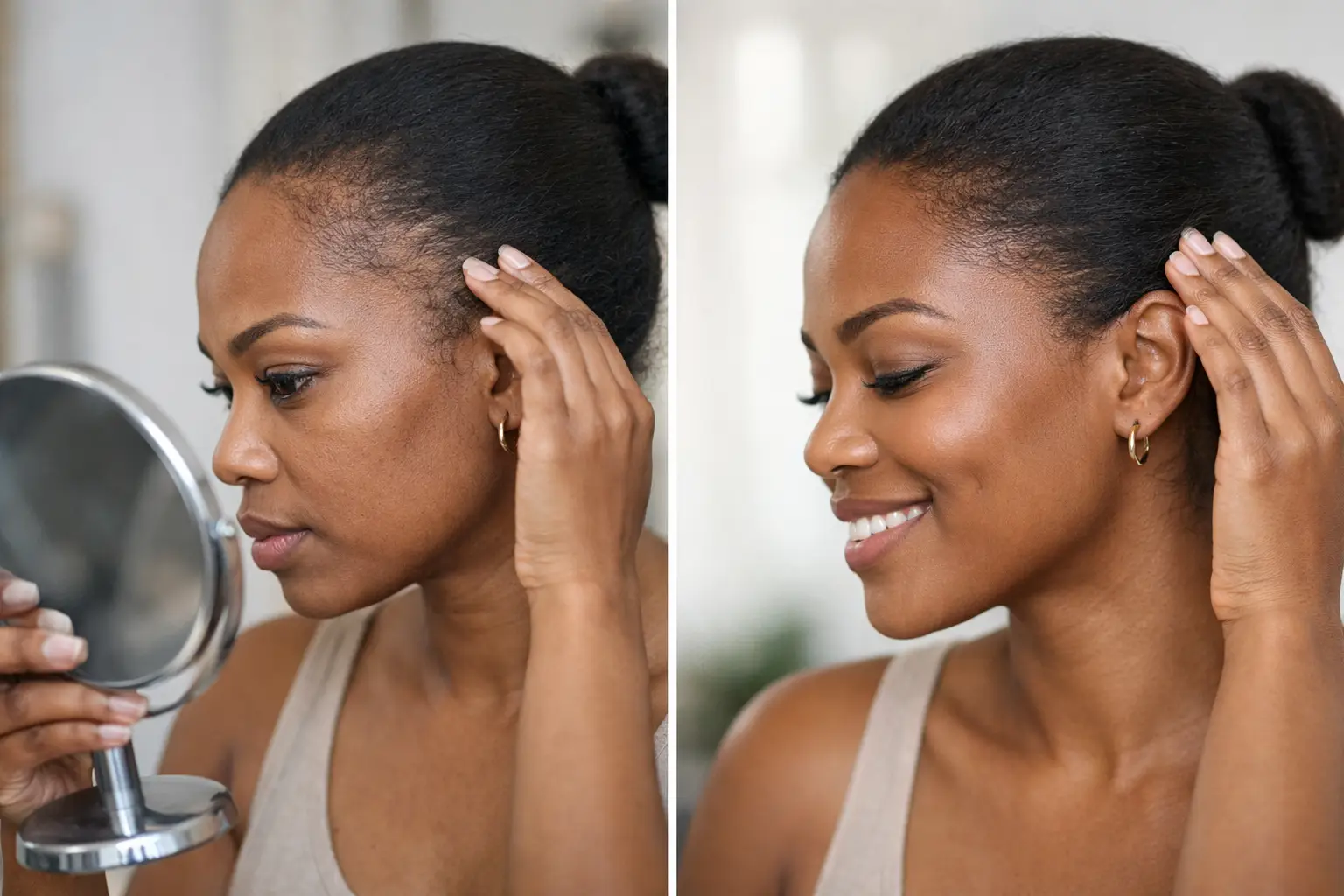
If your hairline looks thinner in photos, your ponytail is exposing more scalp than it used to, or your temple area feels fragile no matter how gently you style it, you are not imagining it. A thin edges regrowth example can be helpful because it turns a vague goal like “I want my edges back” into something more real: small baby hairs returning, less breakage at the corners, and a hairline that slowly starts to look softer and fuller again.
Edges are often the first place to show stress. Tight hairstyles, heat, coloring, friction from bonnets or headbands, and even constant brushing can wear them down faster than the rest of your hair. The good news is that edges can improve when the follicles are still active and your routine stops working against you. The harder truth is that regrowth is usually gradual, and the best results come from consistency, not quick fixes.
A realistic thin edges regrowth example
Picture someone whose edges have been thinning mainly around the temples and front hairline. The area is not completely bare, but it looks sparse, weak, and uneven. In the first two weeks after changing their routine, they do not suddenly wake up with thick new growth. What they usually notice first is less shedding during styling, a calmer scalp, and fewer short hairs snapping off.
By weeks three to six, a realistic thin edges regrowth example often starts to show tiny, fine hairs along the hairline. They can look fuzzy at first, almost like soft flyaways, but they matter. That early growth means the area may be responding. The texture may not match the rest of the hair right away, and the length can be frustratingly slow, but visible change often begins here.
By weeks six to twelve, those baby hairs may look denser and start blending better with the surrounding hair. If the person has also stopped wearing tight styles, reduced heat, and used a scalp-supporting routine consistently, the edge line can begin to look more even. The biggest shift is not always dramatic length. Sometimes it is better coverage, less scalp showing, and stronger strands that are no longer breaking as soon as they appear.
That said, results depend on why the thinning happened. If your edges are stressed from styling and breakage, regrowth can be more straightforward. If the issue has been going on for years, involves scarring, or is tied to hormonal changes, recovery may be slower and less complete.
What thin edges regrowth usually looks like first
Most people expect length. What they often get first is density at a very short length. That can feel underwhelming if you are checking your hairline every day, but it is still progress.
Early regrowth usually shows up as soft, fine hairs in areas that looked slick or empty before. Your hairline may appear less sharp and more feathered. The strands might be fragile in the beginning, which is why protecting them matters as much as stimulating them. If you keep pulling, brushing, gluing, or slicking the area down, new growth can break before it has a chance to mature.
This is where a lot of people get discouraged too soon. They see tiny hairs and assume the results are not strong enough, when really the next phase is helping those hairs stay, strengthen, and grow longer.
Why edges thin out in the first place
Edges are delicate by nature, but certain habits can make thinning much worse. Tight ponytails, braids, wigs, sew-ins, and repeated slick-back styles are common triggers. So are bleach, relaxers, hot tools, and over-manipulation. Even sleeping on rough fabric or constantly touching the hairline can add stress over time.
Scalp health also plays a role. Dryness, buildup, irritation, and inflammation can create a poor environment for healthy growth. Internal factors matter too. Nutrient gaps, high stress, postpartum changes, and general hair shedding can make edges look thinner faster because the area is already vulnerable.
That is why edge recovery works best when you stop treating it like a one-product problem. Most people need a routine that supports the scalp, protects the strand, and gives the body nutritional support at the same time.
How to improve your own thin edges regrowth example
The first step is simple but not always easy: remove the source of tension. If your style pulls at the hairline, it is not helping, even if it looks polished. Looser styles give your edges a real chance to recover. That may mean taking a break from lace glue, high buns, tight braids, or anything that makes your temples feel sore.
Next, focus on scalp nourishment. A lightweight scalp treatment with natural oils like rosemary can support a healthier environment for growth without making the area greasy or heavy. The goal is steady care, not aggressive rubbing. Massage gently with your fingertips for a minute or two, enough to stimulate the scalp without irritating it.
Daily strand support matters too. Thin edges are not just about getting new hairs to appear. They are also about keeping fragile hairs from snapping. A thickening or strengthening product can help the hairline look fuller while reducing the dry, brittle feel that often leads to breakage.
Internal support is the piece many people skip. Hair growth draws on your overall wellness, and if your body is under stress or missing key nutrients, your results may lag. A simple, consistent routine that includes nutritional support can help reinforce what you are doing topically.
That is why systems tend to outperform one-off products. When scalp care, strand protection, and internal support work together, you are not relying on a single step to fix a complex problem.
What can slow your progress
One of the biggest mistakes is switching products every week because you are impatient. Edges do not respond well to chaos. If you keep changing your routine, you may never know what is helping and what is setting you back.
Another common issue is mistaking breakage for no growth. Your edges may actually be growing, but if they are dry, rubbed, or pulled constantly, they can break off at the same short length. That creates the illusion that nothing is happening.
There is also the temptation to slick down new growth to make your hairline look neat. It makes sense, but it can work against you. Fresh edge regrowth is often the most fragile hair on your head. Treating it gently is what gives it a chance to turn into visible fullness later.
How long should you give it?
For most people, eight to twelve weeks is a fair window to judge whether a new edge routine is doing something useful. That does not mean full transformation in that time. It means you should be looking for signs such as less shedding, less scalp irritation, tiny new hairs, better coverage, or stronger texture at the hairline.
If the area has been thinning for a long time, be prepared for a longer timeline. Hair grows in cycles, and edges often need extra patience because the strands are finer and more exposed to daily stress. Quick improvement in appearance can happen with strengthening and thickening support, while true regrowth usually takes longer.
If you notice a shiny, smooth area with no visible follicles, or the thinning is rapid and severe, it may be worth getting expert guidance. Sometimes the issue is beyond styling damage, and waiting too long can make recovery harder.
The mindset that helps most
The best regrowth stories usually do not come from doing one dramatic thing. They come from doing the boring right things long enough to let your hair respond. Gentle styling. Consistent scalp care. Daily support for thicker-looking strands. Nutritional backup. Less tension, less heat, less damage.
If you want a thin edges regrowth example to follow, look for steady progress, not perfection. Fuller edges rarely come from panic-buying random products or hiding the problem under tighter styles. They come from creating the kind of routine your scalp and hairline can actually thrive in.
If your edges have been through stress, overstyling, or breakage, it is not too late to change the pattern. Stay consistent, protect what starts to grow in, and give your hairline the kind of care that supports real results. Sometimes the first sign of success is just a soft row of baby hairs at the temple – and that is often exactly where the comeback begins.