
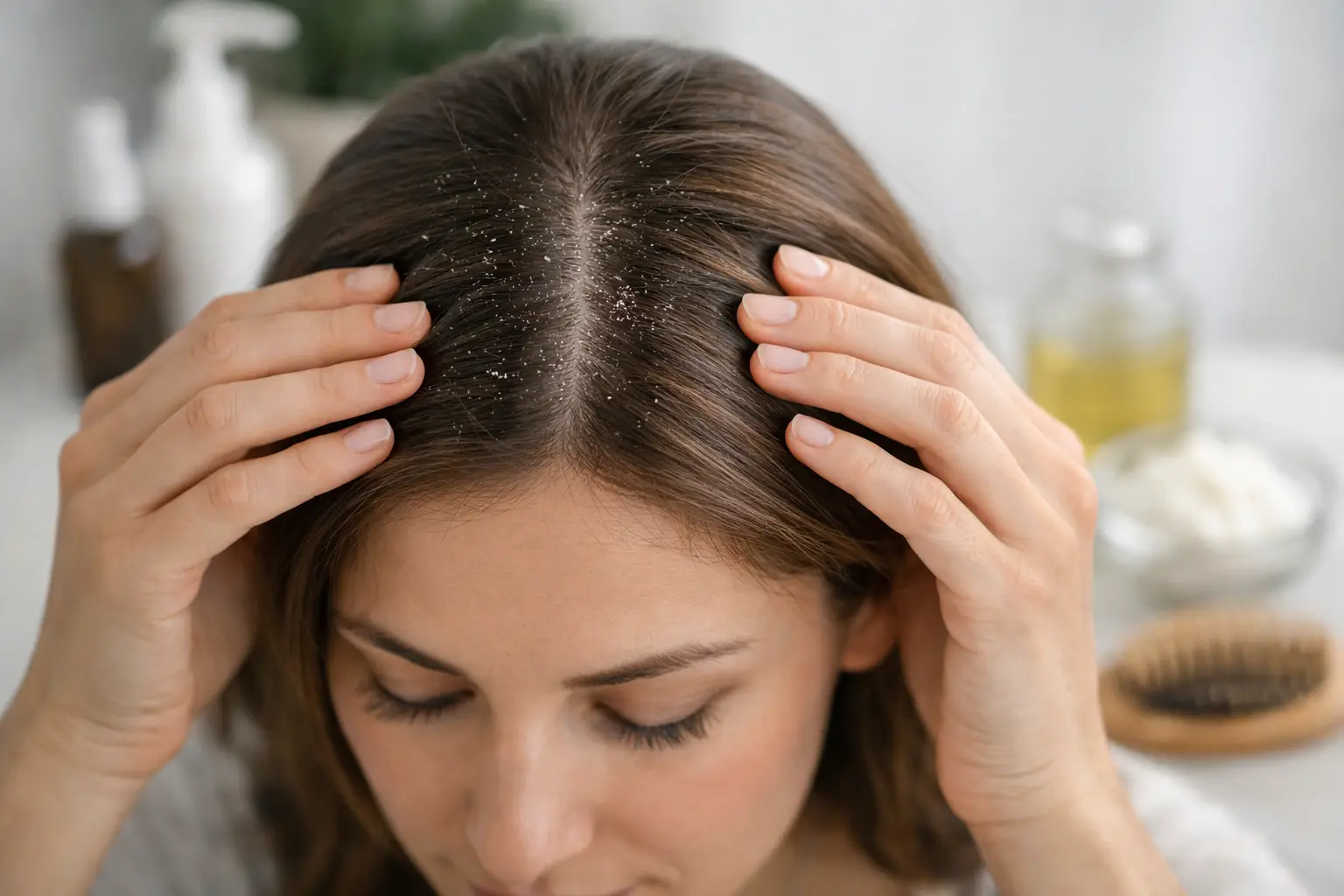
Those white specks on your shoulders can feel like a small problem until they show up after every wash, make your scalp itch, or leave your hair looking less fresh than it is. If you are asking, “why is my scalp flaky?” the answer is not always simply that your scalp is dry. Flakes can come from product buildup, irritation, dandruff, skin conditions, or a routine that is working against your scalp instead of supporting it.
The good news: most flaky-scalp triggers are manageable once you identify the pattern. Your goal is not to scrub your scalp harder. It is to clear what does not belong there, protect your skin barrier, and build a routine that supports a calm, healthy environment for stronger-looking hair.
Why Is My Scalp Flaky? Start With the Type of Flake
Dryness and dandruff are often treated as the same thing, but they behave differently. A dry scalp typically produces small, fine white flakes. Your scalp may feel tight, especially after shampooing, during colder weather, or after using hot water and strong cleansing products. The flakes are usually dry rather than oily.
Dandruff is more often connected to excess oil, sensitivity to a naturally occurring yeast on the scalp, and faster-than-normal skin-cell turnover. The flakes may be larger, yellowish, or slightly greasy. You might also notice itchiness, redness, or flakes that return quickly after washing.
This distinction matters because adding more oil to a truly dry scalp may feel soothing, while adding heavy oils to active dandruff can sometimes make buildup worse. There is no one-size-fits-all fix. Pay attention to whether your scalp feels dry and tight, oily and itchy, or coated with residue.
Common Reasons Your Scalp Starts Flaking
Your shampoo is too harsh, or you are washing too often
A shampoo that leaves your hair squeaky-clean may also be stripping away the oils your scalp needs to stay comfortable. Frequent washing, very hot showers, and strong cleansers can weaken the skin barrier. In response, your scalp may feel dry, itchy, and flaky.
On the other hand, stretching wash days too far can allow oil, sweat, dead skin, and styling products to collect at the roots. That buildup can feed dandruff-related irritation and make flakes more obvious. The right wash frequency depends on your scalp, activity level, hair texture, and the products you use. For many people, the sweet spot is regular cleansing without over-cleansing.
Product buildup is sitting at the roots
Dry shampoo, hairspray, thick conditioners, leave-ins, oils, and styling creams can all leave residue behind. This is especially common when products are applied close to the scalp rather than through the mid-lengths and ends.
Buildup does not just make flakes visible. It can make your roots feel heavy, interfere with a clean scalp routine, and create the appearance of thinner hair by weighing strands down. If flakes appear after you added a new product or began using more dry shampoo, that is a useful clue.
Your scalp does not agree with an ingredient
Fragrance, essential oils, preservatives, hair dye, and certain styling ingredients can cause contact irritation in sensitive people. The signs can include burning, redness, tenderness, itching, or flaking that begins soon after using a particular product.
Natural ingredients are not automatically irritation-free. A formula can be plant-based and still be too strong for your scalp. If you suspect a reaction, stop the new product and keep the rest of your routine simple while your scalp settles. When symptoms are intense or persistent, a dermatologist can help identify the trigger.
Weather, stress, and lifestyle shifts are showing up on your scalp
Cold, dry air can pull moisture from both skin and scalp. Indoor heating can make that effect worse. Stress, lack of sleep, illness, and hormonal changes may also influence oil production and inflammation, which can make an existing dandruff tendency flare.
That does not mean flakes are your fault. It means your scalp responds to what is happening around and within your body. A steady routine is often more helpful than bouncing between aggressive treatments whenever flakes appear.
A skin condition may be involved
Seborrheic dermatitis is a common cause of recurring dandruff-like flaking and can create greasy scales, redness, and itchiness. Psoriasis can cause thicker, more defined silvery scales that may extend beyond the hairline. Eczema may bring dryness, irritation, and sensitivity.
These conditions can overlap in appearance, so guessing is not always productive. If your scalp is painful, bleeding, crusting, very inflamed, or not improving after several weeks of thoughtful care, make an appointment with a dermatologist. Getting the right diagnosis can save you from cycling through products that never address the real issue.
What to Do for a Flaky Scalp Without Overdoing It
Start by simplifying. Use lukewarm water, focus shampoo on the scalp, and massage gently with your fingertips rather than scratching with your nails. Scratching can create tiny breaks in the skin, increase inflammation, and make flakes feel even worse.
If your symptoms sound like dandruff, use an over-the-counter anti-dandruff shampoo as directed on the label. Different active ingredients work in different ways, so it may take a little trial and consistency to find what helps. Give the shampoo enough contact time on the scalp before rinsing. Using it once and expecting permanent results is rarely realistic.
If your scalp feels dry and tight instead, choose a gentler shampoo and avoid piling on exfoliants, clarifying treatments, and harsh scalp scrubs. Clarifying can be useful for genuine buildup, but it is not an everyday answer. Too much exfoliation can turn a mildly flaky scalp into an irritated one.
After washing, keep conditioner mainly on the lengths and ends unless it is specifically made for the scalp. Rinse thoroughly, particularly around the crown, nape, and behind the ears where residue can linger. Wash brushes, combs, pillowcases, hats, and hair accessories regularly too. Reintroducing old oil and product residue to a freshly washed scalp can keep the cycle going.
Support Your Scalp While You Support Hair Growth
A flaky scalp does not automatically cause hair loss, but chronic irritation, heavy buildup, and constant scratching can make your hair routine harder than it needs to be. Healthy-looking growth starts with a scalp that is clean, comfortable, and treated with care.
This is where balance matters. Scalp treatments can be a helpful part of a hair wellness routine, but they should not sting, leave a greasy layer, or replace proper cleansing. If you use a rosemary-based scalp product or any targeted serum, apply it as directed and monitor how your scalp responds. Stop if you notice burning, increased redness, or worsening flakes.
For people dealing with both shedding concerns and scalp stress, a coordinated approach is easier to maintain than a crowded bathroom shelf full of random fixes. ROXIHAIR’s 3-step system is designed to support the scalp, the look of fuller strands, and nutritional hair wellness in one at-home routine. Still, even the best routine works better when it is matched to your scalp’s current needs rather than used aggressively.
When Flakes Need Professional Attention
Do not wait it out if your flaking comes with significant redness, swelling, pain, sores, pus, thick plaques, or noticeable patchy hair loss. Those signs can point to something beyond ordinary dryness or dandruff. Seek medical advice promptly if you develop a rash after coloring your hair or using a new scalp product, especially if you have facial swelling or trouble breathing.
A dermatologist can assess whether you are dealing with dandruff, psoriasis, eczema, fungal infection, contact dermatitis, or another condition. They can also recommend treatment that fits your hair type and your skin, which is particularly valuable if you have tried multiple shampoos with no real change.
Your scalp does not need punishment to look better. Treat flakes as useful feedback: cleanse consistently, reduce irritation, avoid product overload, and give a simple routine time to work. A calmer scalp can make every wash day, styling day, and hair-growth goal feel more within reach.