
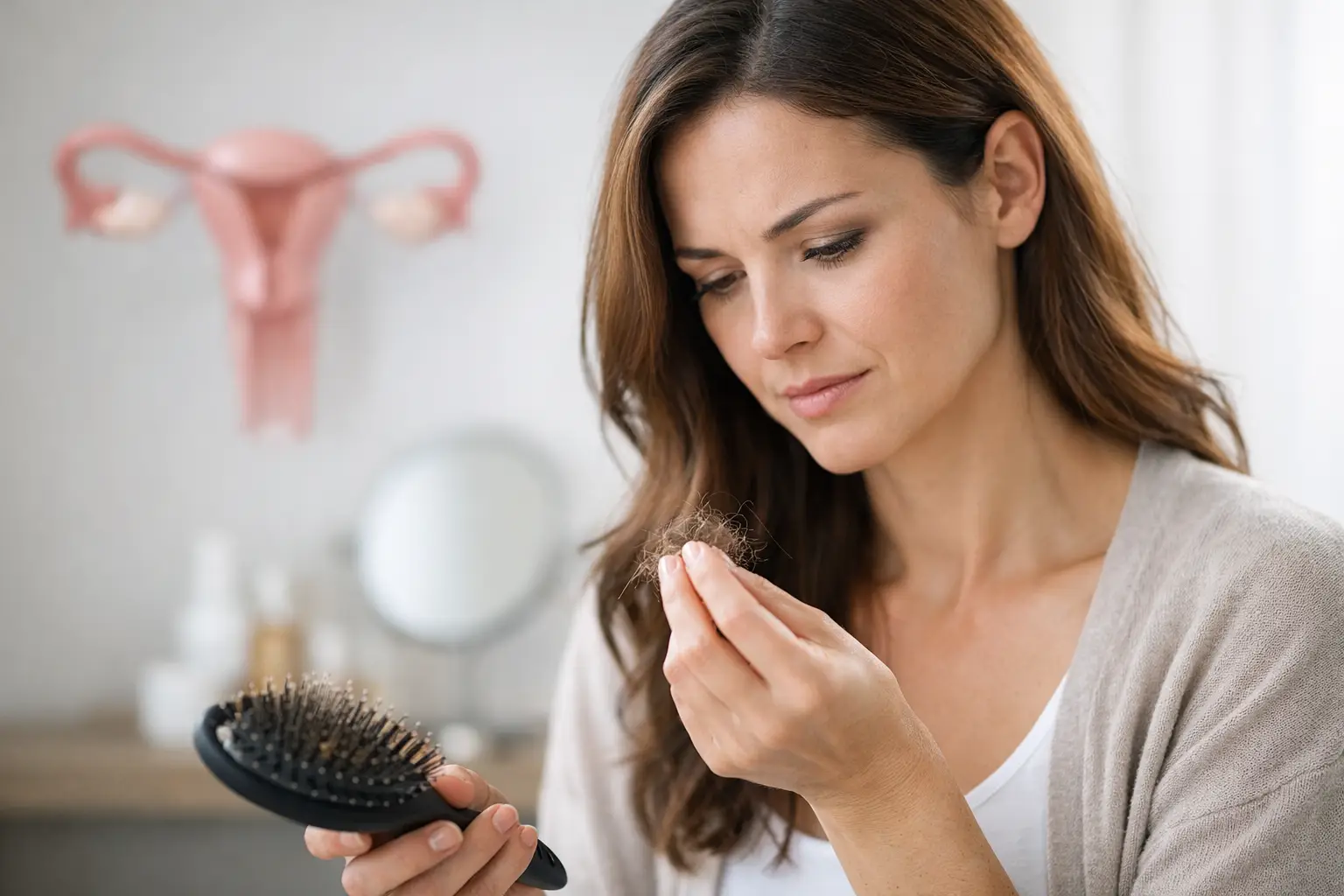
Seeing more hair in the shower, on your brush, or around your hairline can feel personal fast. This guide to managing hormonal shedding gives you a practical way to respond without panic, harsh routines, or a drawer full of random products. Your hair is often reacting to a change happening inside the body, and consistent support can make the growing-out phase easier to navigate.
Why Hormonal Shedding Can Feel So Sudden
Hair grows in cycles. Most strands spend years in a growth phase, then move through a resting phase before shedding to make room for new growth. Hormonal shifts can push more follicles into that resting-and-shedding stage at the same time. The result is the kind of diffuse shedding that makes your ponytail feel thinner or your part look wider.
Common triggers include postpartum changes, stopping or starting hormonal birth control, perimenopause and menopause, thyroid concerns, major stress, rapid weight changes, and conditions that affect hormone balance. Some people notice more shedding a few months after the trigger, which can make it difficult to connect the dots.
Hormonal shedding is not the same as every type of hair loss. A gradual widening part, recession at the temples, patchy loss, scalp pain, or sudden clumps of hair deserve a closer look. The right routine can support healthier-looking hair, but it cannot replace medical guidance when an underlying condition needs attention.
Start With a Clear, Calm Check-In
Before changing every product at once, look at the timing. Ask yourself whether your shedding began after a pregnancy, illness, medication change, stressful period, restrictive diet, or shift in your menstrual cycle. Take a few photos of your part and hairline in the same lighting every four weeks. Photos are more useful than checking the mirror every day, because day-to-day shedding naturally varies.
Also notice what is happening to the hair you keep. Is it breaking midway down the strand? Does your scalp feel dry, oily, flaky, or irritated? Are new short hairs appearing around the hairline? Shedding from the root and breakage from heat, bleach, tight styles, or rough detangling can happen together. Treating both is how you protect the fullness you still have.
Know When to Speak With a Clinician
A dermatologist, primary care clinician, or OB-GYN can help you sort out whether hormones are the likely driver. Consider making an appointment if shedding is heavy for more than a few months, you have irregular periods or new facial hair growth, your scalp is itchy or inflamed, or you feel unusually tired, cold, dizzy, or unwell.
Bring a simple timeline of your symptoms, recent life changes, medications, and supplements. A clinician may decide that testing for thyroid function, iron status, nutritional deficiencies, or other concerns makes sense. Do not stop prescribed medication or start high-dose supplements based on hair shedding alone.
A Guide to Managing Hormonal Shedding at Home
The most helpful home strategy is not aggressive. Your goal is to create a steady environment for your scalp, minimize breakage, and give your body the basic support it needs while the hair cycle resets.
Give Your Scalp Consistent Attention
A scalp routine should feel like care, not punishment. Keep your scalp clean enough to remove oil and buildup, especially if you use styling products or dry shampoo. The ideal wash frequency depends on your hair texture and scalp oiliness. Fine or oily hair may feel better with more frequent washing, while dry, textured, or color-treated hair may need a gentler schedule.
When you apply a scalp treatment, use the pads of your fingers instead of your nails. A brief, gentle massage can help distribute the product and turn your routine into a moment of real self-care. Avoid piling on essential oils or DIY mixtures at high concentrations. Natural ingredients can still irritate sensitive skin, and an irritated scalp is not a strong foundation for healthy-looking hair.
A simple system can remove the guesswork: scalp drops for targeted nourishment, a thickening spray for the appearance of fuller strands and daily protection, and a nutritional supplement that supports your broader wellness routine. ROXIHAIR’s three-step approach is designed around that kind of easy, at-home consistency rather than complicated treatment plans.
Protect Fragile Strands From Breakage
Shedding is hard enough. You do not need preventable breakage making your hair look even thinner. Be especially gentle when your hair is wet, since wet strands stretch and snap more easily. Use a wide-tooth comb or flexible detangling brush, begin at the ends, and work upward in small sections.
Take a temporary break from the habits that pull hardest: tight buns, slick ponytails, extensions that strain the roots, frequent bleaching, and very hot tools. You do not have to abandon your style forever. Think of this as a recovery season. Looser styles, lower heat, a heat protectant, and soft fabric hair ties can help you hold onto the length you are growing.
If you want instant confidence while you wait for your routine to do its work, strategic styling is fair game. A volumizing spray at the roots, a shifted part, a layered cut, or a lightweight mousse can make hair look fuller without adding unnecessary tension. Avoid heavy oils at the roots if they make your scalp feel coated or force you to scrub more aggressively later.
Support Hair Growth From the Inside, Without Overpromising
Your body prioritizes essential functions before hair. When protein intake is too low, meals are inconsistent, or a restrictive diet leaves you short on key nutrients, hair may reflect it. Focus on regular meals with protein, colorful produce, healthy fats, and carbohydrate sources that keep your energy steady. Hydration matters too, although drinking extra water alone will not stop hormonal shedding.
Biotin gummies can fit into a hair wellness routine, but more is not always better. Biotin will not correct every cause of hair loss, and high-dose biotin can interfere with certain lab tests. Tell your clinician about any supplement you take, particularly before bloodwork. The strongest approach is targeted: supplement when it fits your needs, eat enough overall, and identify deficiencies with professional support when symptoms point that way.
Sleep and stress support belong in this conversation as well. Stress does not mean your shedding is your fault. It does mean that small recovery habits can be worthwhile: a regular bedtime, a daily walk, breathing room between obligations, and a scalp ritual you can actually maintain. Choose sustainable changes over an impossible wellness overhaul.
What Results Should You Expect?
Hair growth is slow, so the timeline asks for patience. You may first notice less hair coming out during wash days, then short new growth around the hairline or part. Visible density takes longer because those new hairs need time to gain length. If shedding followed a temporary hormonal event, it may improve as your body settles, but every person and trigger is different.
Be wary of any promise that a single shampoo, oil, or vitamin will immediately reverse hormonal hair loss. The better question is: can you use this routine consistently, comfortably, and without irritating your scalp? A routine that is gentle enough to repeat is usually more valuable than a dramatic treatment you quit after two weeks.
Build a Routine You Can Keep
Morning and evening do not need to become separate hair-care projects. On wash days, cleanse gently, condition the lengths, detangle patiently, and apply your preferred styling support. On non-wash days, use your scalp treatment as directed, protect your hair from tight tension and high heat, and let the routine stay simple.
Track progress monthly, not hourly. If your hair changes for the better, you will have photos that show it. If shedding continues or worsens, you will have clear information to bring to a clinician. That combination of consistency and perspective is powerful.
Your hair may be asking for more patience, not more panic. Start with one manageable routine today, treat your scalp and strands with care, and give yourself permission to seek answers when your body is sending a bigger signal.


Leave a Reply